Monday, September 7, 2015

100 Reasons I love to Run

With another fall training season upon me, I thought it was the perfect time to give homage to the sport of running. I've been wanting to make this tribute for some time now, and figured the timing was perfect as I began another fall training series. (Already registered for the Baca Bolt and Monumental and hoping to get another race in run another one as well). The fall is always my favorite season to run.

The concept of running is a funny thing. It's usually perceived in two ways by people; they either hate it or they love it. To many it's a boring and overly strenuous form of exercise. In some regards this is a fair generalization as running is about as simple and repetitive of an exercise as there is. It is also one of the most demanding since the motion is fully generated by the body, without any added support (unlike the water from swimming or the bike in cycling). 

However just like any exercise the whole purpose is to step out of your comfort zone. And running is the ultimate exercise since it blends cardio with muscle toning. However it takes time to get a feel for the sport. With running there is certainly a beginning stage of adjusting and getting the body into shape which can often take weeks to months depending on the body type. To get to a place where you can actually enjoy the many benefits of running can often take years of training. 

I've been running competitively since my 8th grade year, when I was 14. After I finished track and field in high school I switched over to long distance road races. It did not take me long to realize the many benefits of running. So without further ado here goes my well thought out list,. Next time somebody asks or jokes or doesn't quite understand the reasoning behind it, here's a look at my 100 reasons why I run.


  1. To feel good
  2. To exercise
  3. To get outdoors
  4. To listen to music
  5. To strengthen my muscles
  6. To lose weight
  7. To train for races
  8. To run with my dog Cochie
  9. To run and connect with others
  10. To let out stress
  11. To reflect on the day
  12. To see people
  13. To be seen by people
  14. To feel free
  15. To record data (overall time, splits, calories burnt, etc)
  16. To have multiple courses
  17. To improve on times, splits, and courses
  18. To feel strong
  19. To meet people
  20. To compete with family and friends
  21. To talk about with other people
  22. To feel proud of my accomplishments
  23. To encourage others to partake
  24. To release endorphins
  25. To achieve the runner's high (transcendence of the body and mind in motion)
  26. To feel fast
  27. To improve my mood
  28. To showoff the gear (represent a shirt)
  29. To sleep better
  30. To improve my posture
  31. To build survival skills
  32. To get closer to God
  33. To appreciate the weather (hot, warm, rainy, cool, cold, snowy, or freezing)
  34. To appreciate the surrounding environment (the sky, trees, animals, water, etc)
  35. To see hot women
  36. To feel better about myself
  37. To have a hobby
  38. To have something I'm good at
  39. To break new personal records
  40. To race with other people
  41. To enjoy another person's company thru social exercising
  42. To feel motivated
  43. To motivate others
  44. To take on new challenges
  45. To set goals
  46. To build my confidence
  47. To test my will power
  48. To have a better diet (such as not drinking pop or eating better to run faster)
  49. To stay clear of drugs
  50. To stay clear of smoking
  51. To stay fit
  52. To stay lean
  53. To stay quick
  54. To stay sharp
  55. To feel comfortable
  56. To feel a sense of routine and familiarity
  57. To think of others
  58. To think of the past, the present, and the future
  59. To sweat
  60. To release anger
  61. To release sadness
  62. To smile
  63. To show pride and strength
  64. To show humility and pain
  65. To be in shape for soccer 
  66. To be in shape for triathlons
  67. To be disciplined
  68. To feel inspired
  69. To inspire others
  70. To enhance the state of peace afterwards
  71. To feel aroused
  72. To feel grateful
  73. To stretch out the legs and the body
  74. To feel a sense of belonging 
  75. To feel sane
  76. To be in control of one's body
  77. To be in control of one's mind
  78. To push oneself to new limits
  79. To discover new feelings 
  80. To return to old feelings of nostalgia
  81. To overcome adversity
  82. To hang on at difficult times
  83. To coast along at good times
  84. To pace at a comfortable level
  85. To surge and kick when the time is right
  86. To ease off when the pain becomes unbearable
  87. To feel strong for others
  88. To make others proud
  89. To kill time
  90. To get away
  91. To give off good vibes and energy to others
  92. To take on good vibes and energy from others
  93. To stay healthy
  94. To stay active
  95. To strengthen my bones
  96. To live longer
  97. To breathe better
  98. To increase stamina
  99. To feel happy
  100. To feel alive
This is my personal list, and the many reasons why I choose to run. I think many of these reasons are quite common among runners, however each person has reasons of their own (such as running with their children or for the loss of a loved one).  I've been running for over 10 years now, and I'm sure the list will change as does my life. One things for sure I have no intention whatsoever of hanging up the shoes anytime soon. I hope to be running long into my 60s and 70s.  This list was fairly easy to come up with, which is a true testament to the wonderful hobby of running. 

Sunday, July 19, 2015

My Teams: Chicago Cubs


Just last weekend I had a very memorable experience at Wriglyfield with Palmer and Kyle Lindsay's family. We got tickets on the rooftops, which meant all you can eat and all you can drink. The last time I had seen the Cubs play at Wrigley was in 2010 with Reggie. I had been aching to revisit for some time now and several chances fell thru in the past couple years. Finally the chance came at EJ's bachelor party a couple weeks ago, when I got to talking to Palms. He invited me to tag along with his roommate's family (Kyle Lindsay, Coach Lindsay, and Molly Lindsay from the high school days). Although this was an unusual invite, I couldn't pass up the offer and was excited to finally return to Wrigley field.

We drove up early Saturday morning, and stayed at an older hotel near the ballpark. We had a couple beers in the hotel, then met Kyle's family outside the stadium at Papa Murphys. Just walking around the city already reminded me of my days living there. The environment was incredible as I always remembered it; passionate fans, beautiful women, and the majestic view of Wrigleyfield. The weather was a bit misty out, however it wasn't too hot out which was nice. The food was great, I had some Italian Beef and lots of Corona. Although they loss to their rivals, the White Sox, it was still an incredible day that just flew by. Coming home I was very satisifed with my return to Chicago and promised myself not to wait another 5 years to get back to Wriglyfield. It's always been one of my favorite spots and one of my favorite teams since I was young.

How it All Started

Baseball became my first sport of choice as a young boy. I'll never forget the summer afternoon where my dad pulled up in his Ford Escort with some new baseball gloves, a bat, and a ball. I remember all us kids began playing in the backyard that summer and so the love for the game was born. We played almost everyday and even joined a summer league of Wildcat. I remember I picked it up pretty quickly as a shortstop and had the knack of great defense, diving, and agility. Baseball had become my first athletic passion, and just like every other kid I wanted to be a professional ballplayer.

As we began to understand the sport we turned to the Chicago Cubs as our role models. In those days, the early 1990s, the team was carried by the likes of Ryne Sandberg, Mark Grace, Shawn Dunston, Sammy Sosa, and Rick Wilkins. Soon we were watching all the games on TV, broadcast by the legendary Harry Carey, and his classic singing of the 7th inning stretch. We also began collecting the baseball cards, to get a higher understanding of the MLB. In a couple years I knew many of the players, especially all of the Chicago Cubs. The team was never that good, and would often blow so many games, however our fanship remained loyal. We even went to a couple games in Wrigleyfield, sitting far up in the cheap seats, yet one of the games Harry Carey waved to us.

The baseball obsession phase lasted for a few years, and I remember even sharing it with my cousin Marc, who was a Detroit Tigers fan. He was also pretty good at it and we'd often fantasize about starting our team someday, the Washington Bombers. However in the season of 1994-1995 there was major strike that stopped the full season. This brought an abrupt freeze to our following of the professional league. While we continued to play that summer, I remember at that time I also began to grow an interest in the NFL and later playing soccer.

In the years to follow I continued to play baseball up until 9th grade. However by that time my attention to the Chicago Cubs had somewhat withered away (perhaps due to the strike or just plain old growing up). I remember being much more inspired by the NFL and the World Cup. I remember by the time of high school my first love of baseball eventually took a backseat to soccer, football, and running. While this continued for many years after, the Chicago Cubs have always remained my first and foremost baseball team.

To this day I'm not quite the dedicated baseball fan I once was. That attention has rather been pulled towards the NFL and European futbol, which frankly I find to be much more exciting. Yet thru and thru I have always supported the Cubs in the matter of baseball. As I began working Pitch FX in 2011 for the Indianapolis Indians, my appreciation for baseball was reborn. Now-a-days I'm of the mind that to follow a baseball game on TV and to be there in person are two completely different matters. And I would always chose the 2nd, especially if it were the nostalgic home of my Chicago Cubs.


Memories as a Fan


  • Watching Cubs baseball games on local TV at our house, in Michigan, or at my mom's work of Quinn House.
  • Collecting the baseball cards, singing all our Cubbies songs
  • Philip's favorite player being the catcher Rick Wilkins
  • All the games that relief pitcher Bob Scanlon blew
  • Going to the stadium a couple times with my parents and the Martinez. Sitting up high in the upper decks as they played the Houston Astros. Harry Carey waved to us.
  • The 1998 season where the Cubs made a great run into the playoffs; this was the year that Sammy Sosa was engaged in a home-run race with Mark MgGwuire and broke Roger Marris' single season record. I remember this was all the talk among my classmates in junior high. 
  • Becoming friends with Ryan Palmer, whose entire family were avid Cubs fans and their house was practically a shrine to Wrigleyfield
  • The 2003 season where the Cubs had one of their best teams in many years and made a good run into the playoffs. I remember this season had a significant place in my memory because it was my first freshmen semester in Bloomington. I'll never forget watching the many games in our Forest dorm with Ryan or my other IU friends who were also Cubs fan like Rupright, Molly Lindsay, and Laura Oberhaultzer. I remember the Cubs hype was heavy that fall, especially around their pitching staff led by, Kerry Wood, Mark Pryor, and Carlos Zambrano. Then of course came the infamous game 6 of the NLCS against the Florida Marlins. I remember watching the game with Ryan as the Chicago Cubs were only 5 outs away from the World Series, then went on to blow it in the bottom of the 8th thru a string of bad luck and bad defending.
  • When I lived in Chicago for a year in 2008, I had a rebirth of appreciation for the Chicago Cubs. Every time I had friends visit we would go out drinking at the bars of Wrigleyville or try to catch a Cubs game. I had many good times at those bars. 
  • There were 3 games I went to in the spring/summer of 08. The first one I was visited by several of my old Btown friends (Palmer, EJ, Karlan, Zach Fredericks, and Mark) Palms was our Cubbies expert and showed us the ropes to the bleachers, as it was my first game there in many years. I remember we got extremely wasted among other extremely wasted fans and the Cubs went on to win a great game. Then I'll never forget after the game, the celebratory atmosphere throughout the bars and streets. As we walked into the Vines on Clark, I remember the song "Cecilia" by Simon and Garfunkel was blasting on the speakers and I couldn't be more happy and excited. 
  • About a week later Jackie came to visit me with her boyfriend Erik. I remember this time I was the tour guide and we emulated the experience I just had with my college friends. We sat in the bleachers, got drunk with the other fans, the Cubbies won, and we then went out to the bars to party again. It was yet again another very memorable experience.
  • A couple months later I had my third experience at Wrigley that summer, as Palmer came to visit yet again with Greg Causey. I remember it was an especially hot day, but we still had a very good time in the bleachers and drinking at the bars afterwards. I'm also quite certain the Cubs won, which made my record at Wrigley 3-0 that year.
  • However in late August, my Wrigley experience took a turn for the worse, when Reggie visited. We went on to scalp some tickets, yet only to find out at the gates that they were fake tickets and we were out $30. This was a devastating blow to my Wrigley experience, yet we still went on to have a good time at the bars. 
  • Two years later I had a week's vacation from the BACA, and returned to my favorite city with Reggie. This time we were eager to redeem our Wrigley experience and bought some legit tickets online along the 1st baseline. This was a very enjoyable view as we had beer, hot dogs, and enjoyed the game. (See My Return to Chicago) 
  • For the next five years I had been wanting to go to a Cubs game, however had many opportunities fall through. In 2011 I went with family, however the weather was terrible and rainy. In 2012 I had a great time with my family as we stayed at the beach in Rodgers Park and walked around downtown and the Navy Pier however we did not make it to a Cubs game. The following couple years I tried to make plans with family, Lauren, Ryan, my co-worker Adam, and other friends however no one bit at my plans.  
  • Finally just last weekend I had my long overdue return to Wrigley with Palmer. This was a different experience from the rooftops and with a family I hardly knew, yet still a very memorable experience. My spirit was high and the entire day flew by like a blur, and I left very satisifed. I've told myself and others that I cannot wait another five years to return to Wrigley, I'd like to make it an annual stop on my yearly trip to Chicago. 
Favorite Players
  • Ryne Sandberg (1982-1997) 10x All Star
  • Shawn Dunston (1984-1995) 2x All Star
  • Sammy Sosa (1992-2004) 7x All Star
  • Carlos Zambrano (2001-2011) 3x All Star
  • Derek Lee (2004-2010) 2x All Star
  • Ernie Banks (1953-1971) 14x All Star

Notable Team Records and Statistics
Major league titles
World Series titles (2)
NL Pennants (16)
Central Division titles(3)
East Division titles(2)
Wild card berths (1)1998
Name
Other nicknames
  • The Cubbies, the North Siders, the North Side Nine, the Boys in Blue, the Loveable Losers, the Little Bears, the Blue Bears
Ballpark

Monday, June 22, 2015

Movie Review: Jurassic World

Every summer I try to watch at least one major blockbuster in theaters. These fast-paced, explosive, action films are the stuff that inspired me as a young kid and are best appreciated on the big screen. (Movies such as Star Wars, Lord of the Rings, Batman, Spiderman, X-Men, Matrix, to name a few) Now-a-days I don't go to the theaters near as much as I use to, however if it's something big and special I'll make the extra effort. It always brings me a great feel of nostalgia, and reminds me of my high school days with my good friend, Sergio. We were both huge movie nerds in high school, and developed a pretty good system to get the most out of Rave Motion Pictures.

Well the nostalgic feeling was in full swing this past weekend for two reasons. First because I was revisiting the homefront of Rave Motion Pictures, now known as Carmike. And 2nd because I was revisiting a new installment to the classic Jurassic Park series I enjoyed as a child. When I first saw previews for the new Jurassic World I knew I would have to catch it in theaters and couldn't fall behind on the hype. And so on it's 2nd weekend of release (after shattering the box office records on it's first) I caught it with Andres and Jackie and was very satisfied. It had all the successful blockbuster components; great special effects, great comedy, action, and an all around thrilling story.

This action thriller is the newest and latest installment of the Jurassic Park series, making it part 4. In a way it's more of a revamping of the series, similar to Christopher Nolan's Batman series or the Daniel Craig James Bond series. The premise of Jurassic World is quite similar to the original 1993 Speilberg film. The dinosaur theme park has re-opened with bigger and badder enhancements, which ultimately leads to complete chaos. A whole new slay of characters take center stage in this film, however there are still many references to the original film.

As a young boy I was very intrigued by dinosaurs. When my parents took me to the library, all I wanted to read about was dinosaurs. I would study all the names, draw and write about them, and enjoyed any movie about dinosaurs (Fantasia and Land Before Time). I was 9 years old when Jurassic Park was released in 1993, and remember it being a very thrilling experience. However the sequels The Lost World in 1997 and Jurassic Park III in 2001 weren't near as good as the first one. Nonetheless I still enjoyed all three since they provided groundbreaking special effects and thrilling experiences. So naturally I was excited to hear they were revamping the series with a new release.

The film is once again set in Costa Rica (with some very familiar landscapes). This time the story is driven by a new lead star in Chris Pratt. I was quite surprised to see that this goofball from Parks and Rec, made for a very good Indiana Jones style hero. His likable character blends a Navy Seal operative, a fossil raptor trainer, and a just bad-ass persona, all packaged with a good sense of humor. I think this break-thru performance should pave the way for him as a lead blockbuster actor. There's also the park director, played by Bryce Dallas Howard and her two young nephews that are caught in the midst of the action. The kids in the film also play a central force of the film, by capturing the spirit of adventure that is Jurassic Park.

Thursday, May 14, 2015

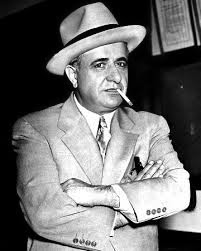
Study of the American Mafia

One of my all time favorites movies is The Godfather, directed by Francis Ford Coppola in 1972. It seems every year around this time, I'm influenced by it's premise (see Godfather Phase) It's a story about an Italian mafia and their ruthless dealings set in New York City, 1940s-1950s. This crime story is loosely based on the real-life syndicate of the Five Italian Crime Families from New York City.

To me the film is rich in culture, history and dramatic quality. It is also very violent and depicts a negative light towards Italian culture. As violent as the film is, it only vaguely hints at the underground criminal dealings of these organized gangs. In this post I'd like to study the historic criminal syndicates of the Italian and Jewish Crime Organizations.

Please note this study is not meant to stereotype the incredibly rich Italian and Jewish cultures. It's rather a focus on the select few within the culture, that do not represent their people as a whole. This post is in no way meant to justify the actions of these mobs, which led to a century of ruthless crime and violence. It is merely a study of interest, as to how these organizations were able to rise from nothing, to become more powerful than the government itself.

The Immigrant Gangs

This study on American organized crime is a continuation of my previous post that focused on immigration and the rise of Irish gangs in the 1860s. Immigration from Europe into America continued in heavy numbers throughout the the late 1800s and into the early 1900s. From 1860 to the onstart of WW1, nearly 9 million Italians immigrated to America in search of better work wages. Also during this time nearly 3 millions Jews immigrated from Eastern Europe, the majority of which were escaping persecutions and pogroms within the Russian Empire. A majority of these Jewish  and Italian immigrants settled into poverty stricken ghettos in New York City.

Just as the Irish immigrants of New York City developed gangs, so did the Jewish and Italian immigrants. However the Jewish and Italian gangs were different than the Irish gangs, in that they were much more organized. Part of this organized crime structure came from their homelands, such as the Black Hand of the Sicilian Mafia, which dated back to 1812 (the start of Italian Unification). Thru their native connections, some of these gangsters already had significant muscle and influence within their neighborhood districts.

By the late 1890s, the Jewish, Irish, and Italian gangs were fighting each other for control of the Five Points district. By 1901 it was Paul Kelly's Italian Gang, the Five Points Gang, that had become the dominant power of Manhattan. Paul Kelly's Italian Five Points Gang was rivaled by Monk Eastman's Jewish Eastman Gang. Both of these gangs became the early predecessors to the American Mafia format of organized crime. Both Al Capone and Lucky Luciano were youth members of the Five Points Gang, and would both go on to establish two of the most infamous Italian crime organizations during the Prohibition Era.

The Prohibition Syndicates

With the passing of the 18th Amendment in 1920, the United States government made it illegal to trade, manufacture or sell any alcohol whatsoever. This new regulation became a new booming market for the underground world, most notably the crime syndicates. Bootlegging rackets become one of the primary sources of profits for mafia organizations based in New York City and Chicago. Al Capone became one of the most infamous of these bootlegger's thru his organized gang known as the Chicago Outfit.

To add to the rise of organized crime during the 1920s, was a 2nd wave of Italian Immigration. This was due to the fact that Benito Mussolini had began a strict dictatorship in Italy, with a strong opposition against mafia in his country. Many members of the Sicilian Mafia and Black Hand organizations fled to New York City to partake in the rising influence of organized crime.

By the late 1920s some of these mafia organizations had become so powerful, they began to fight with each other, rather than against the law. This was mostly territory disputes among Jewish, Irish, and Italian bootlegging gangs. By 1930 New York City had been dominated by two major Italian-American mafia gangs; Joe Masseria's faction and Salvatore Maranzano's faction. Their struggle for total control of the New York City underworld lead to the infamous Castellammarese War. This bloody gang war marked a turning point in organized crime, when Charles Lucky Luciano established the Commission to avoid any further territorial disputes.

The Organized Commission

In 1931 Charles Lucky Luciano murdered the boss of all bosses, Maranzano, and established a new underworld governing body known as the Commission. This committee enabled the major bosses of organized crime to discuss their disputes and avoid violent confrontation with one another.

The Commission consisted of the Five Italian Crime Families of New York City, as well as Al Capone's Chicago Outfit. Luciano also opened the door to new relations with the Jewish Mafia, most notably Meyer Lansky. By the 1950s the Commission had 26 organized mafias spread across America. The media referred to this network of crime as the National Crime Syndicate.

The Gambling Boom

By the 1930s Meyer Lansky had paved the way for the Jewish Mafia, thru his spurring of the gambling industry. He established powerful business relations in Cuba, Florida, New Orleans, and Las Vegas. By the 1940s these sites all became booming markets for casinos, hotels, and entertainment. In 1946 he partnered with Bugsy Siegel to launch a hotel in the desert of Las Vegas, known as the Flamingo, which would become the first landmark of a gold-mine.

In 1952 Lansky's friend Fulgencio Batista became president of Cuba, which enabled him to run his casinos without any interference. However by 1959 these relations came to an abrupt end due to the Cuban Revolution led by Fidel Castro. Batista as well as the American-Mafia casinos were driven out of Cuba. However by this point Lansky had already reaped the rewards of Las Vegas, Florida, New Orleans, and Los Angeles. By this point many crime organizations were able to turn legit thanks to their casino and hotel businesses.

The Crackdown

By 1960 the US government, led by president John F. Kennedy, began to crack down on organized crime. He was also aided by the FBI, under the proud leadership of John Edgar Hoover, who despised non-American gangsters. In 1970 the RICO (Racketeer Influenced and Corrupt Organizations) Act was passed to prosecute mafia mobsters. From that point the Italian/Jewish mafias no longer had the stronghold on crime. The underground business was dispersed among smaller gangs and drug cartels. However organized crime still exists today due to it's longstanding family structures and codes.

Italian Crime Families
  • The Five Families (based in New York City; these 5 Italian families have dominated the organized crime syndicate since the 1930s)
    • Bonnano: Following the Castellammarese War, boss Salvatore Maranzo was murdered at the hands of the Joe Masseria. Maranzo's underboss Joseph Bonnano went on to continue Maranzo's organization by establishing his own powerful crime family
    • Colombo: This crime family was based out of Brooklyn, NY and established by boss Joseph Profaci. He went on to lead the family for over three decades. He was later replaced by Joseph Colombo who changed the organization's family name to it's present day form. 
    • Gambino: This family was formed by Vincent Mangano who ruled for twenty years until he was disposed by the notorious Albert Anastasia aka "the executioner". Few years later Anastasia was murdered by his underboss Carlo Gambino, of which the family took it's present day name. 
    • Genovese: Perhaps one of the most powerful of the five families, it was founded by Charles Lucky Luciano, after the death of Boss Joe Masseria following the Castellammerese War. Based in Manhattan, it was Luciano who established the Commission, to maintain diplomatic relations between the five families. He was however later charged in court, and his power was handed over to his under boss, Frank Costello aka "the Prime Minister". Costello was later replaced by Vito Genovese of which the family took its present day form.  
    • Luchese: One of the oldest of the five families, it was formed in the early 1920s by Gaetano Reina, based in the Bronx. Following a string of murders the role of head boss was later assumed by Tommy Gagliano who ruled for 20 years. He was later replaced by Tommy Lucchese of which the family took it's present day form.  
  • Chicago Outfit 
    • Based out of Chicago, IL this Italian Mafia organization was founded in the 1920s by Al Capone and Johnny Torrio. It was one of the most influential gangs of the Midwest, thru it's illegal distribution of alcohol during the Prohibition. Al Capone was considered the epitome of a ruthless gangster, as he openly waged war on any of his underground competitors. One of the most infamous of these conflicts took place at the St. Valentine's Day Massacre where Capone had 7 Irish-American gangsters killed. Capone was able to dominate the city of Chicago thru his corrupt power for nearly 10 years, until he was finally arrested on tax evasion. The organization went to the leadership of Frank Nitti and Paul Ricca, however following the repeal of the Prohibition, the Outfit had lost much of it's profit. It continues to operate to this day, however nowhere near as influential as it was in the 1920s and 30s. 
Italian Mobsters
  • Paul Kelly
    • He was a very influential Italian immigrant from New York City. Thru his powerful relations with Tammany Hall, he was able to establish one of the first organized street gangs, known as the Five Points Gang. Many notorious gangsters made their start in Kelly's gang, such as Johnny Torrio, Al Capone, Bugsy Siegel, Meyer Lansky, and Charles Luciano. 
  • Charles Luciano (Lucky)
    • He was perhaps one of the most influential Italian mafia bosses of New York City. He established the Commission as a means to govern the crime network, and also made new partnerships with notable Jewish mobsters such as Meyer Lansky. In 1930 he took over Joe Masseria's organization to establish his own crime family, which he lead for nearly 20 years. In 1946 he was deported by the US government, however he continued to play an influential role on the organizations business from Italy as well as Cuba. 
  • Johnny Torrio (The Fox, The Immune)
    • Torrio was one of the earliest Italian gangsters of New York City, and helped Paul Kelly establish the Five Points Gang in 1901. He later went on to establish the Chicago Outfit with his protege Al Capone in 1920. Following some conflicts with the Irish North Side Gang, he stepped down as boss, and moved back to New York City to council the Genovese Crime Family. 
  • Albert Anastasia (The Executioner, The Mad Hatter)
    • He was perhaps one of the most famous "soldiers" of the organized crime syndicate, who was able to use his ruthless grit to climb the ranks. He established Murder Inc, which became Luciano's (as well as the the Commission's) enforcement agency. Anybody who got out of line within the syndicate had to answer to Anastasia. In 1951 Anastasia disposed of Boss Vincent Mangano to assume control of the family, however much to the resentment of Vito Genovese, who saw this as a break of mafia code. This almost resulted in another gang war, however by 1957 Anastasia was assassinated in a barber shop most likely by Genovese' men. Anastasia was replaced by Carlo Gambino as the new boss and head of their family. 
  • Al Capone
    • He was born in New York to Italian Immigrants and as a youth he became a member of Paul Kelly's Five Points Gang. At the age of 20 he followed his mentor, Johnny Torrio, to Chicago where he helped him run his newly established bootlegging racket. Capone took over for Torrio, after he stepped down following an assassination attempt. He was constant war with the Irish North Side Gang. By the mid 1920s he had a strong influence over political elections as well as the police force of Chicago. In 1929 he became nationally recognized following the St. Valentine's Day Massacre of 7 Irish gang members. Several years later he was finally convicted and imprisoned for tax evasion. He spent the last of his years suffering from mental illness and died at the age of 48.
  • Frank Costello (Prime Minister)
    • He was the consigliere to Charles Luciano, and took the helm in 1946 after Luciano was deported. Costello's regime underwent smooth profits thru their new gambling investments in New Orleans, Miami, Las Vegas, and Los Angeles. He was often considered the Boss of Crime Bosses, and nicknamed the Prime Minister of the Underworld. However in 1957 he went into retirement following an assassination attempt coordinated by Vito Genovese. Vito felt he should be rightful boss of the family, since he was the underboss to Luciano. Costello renounced his leadership role to Vito who changed the family name to Genovese. Costello retired from the crime family yet still played an influential role on underground dealings and profit.   
Jewish Mobsters
  • Arnold Rothstein (The Brain)
    • He was one of the first Jewish Americans to achieve wealth thru racketeering and sports gambling. He established an organization very similar to the Italian mafia, where crime was conducted in an organized business model. By 1910 he became one of the top Jewish Mobsters in New York City. After fixing the 1919 World Series he became an infamous kingpin of the Jewish Mob. In 1920 he shifted his business to bootlegging and narcotics and worked with Charles Luciano and Meyer Lansky. He was shot and murdered at the age of 46 for a debt he owed at a poker game. 
  • Meyer Lansky (Mob's Accountant)
    • He was the most influential leaders of the Jewish Mob and played a pivotal role in the National Crime Syndicate from the 1920s until his death in the 1980s. He worked closely with the Italian Mafia, thru his close relationship with Charles Lucky Luciano. Unlike the Italian Mafia however Lansky stuck mostly to gambling, and made his fortune in hotel resorts in Cuba, Florida, New Orleans, and Las Vegas. In the mid 1940s, he worked with Bugsy Siegel to turn the city of Las Vegas into a booming marketplace of gambling. However by 1959 his casino empire took a major hit as a result of the Cuban Revolution. He spent the last of his years living quietly in Miami Beach, and was never found guilty of any major crimes, however his fortune was nearly diminished by the time of his death. 
  • Benjamin Siegel (Bugsy)
    • He was recruited at a young age by Meyer Lansky to form an organization in Brooklyn that could compete with the Italian gangs. Together they first formed the gang, Bugs and Meyer Mob in 1920, specializing in car thefts and gambling. By the late 1920s they got involved with Charles Luciano, and helped form Murder Inc, which became the armed muscle of the Mafia. Siegel is often credited with a number of big name hits, which brought him his nickname Bugsy. However his big break came out west in California and later Los Angeles. In 1945 he came up with the idea to create an oasis of gambling in hotels in Las Vegas. With financing from Lansky, and help from LA gangster Mickey Cohen, he was able to launch the Flamingo Hotel in 1946. It was the first major hotel of the Las Vegas strip, still in business today. Siegel was murdered that same year by fellow mobsters, most likely for the debt he incurred on the hotel. 
  • Mickey Cohen
    • He began his career as a professional boxer, however eventually moved to Chicago to work for Al Capone's Chicago Outfit. He was arrested for a brief time in Chicago and eventually relocated to California by Meyer Lansky. It was here that Cohen began to thrive in the underground criminal world of Los Angeles and Las Vegas. He worked under Bugsy Siegel to launch the Flamingo in 1946. Following the assassination of Siegel, Mickey Cohen took the helm of organized business on the west coast and became a kingpin of Las Vegas. He was eventually convicted of tax evasion in 1951 and 1961. He died in 1976 from stomach cancer.
Movies about the Mafia
  • On the Waterfront (1954) This film gives a portrayal of the mafia's influence on union workers at the docks of New Jersey. It has one of cinema's most famous lines from Marlon Brando, "You don't Understand, I coulda had class. I coulda been a contender. I could have been somebody instead of a bum. Which is what I am." 
  • The Godfather I and II (1972, 1974) This masterful film gives a fictional portrayal of the five crime families of New York City. The first film makes references to the Sicilian influence of these organizations as well their hierarchical structure. The second film makes reference to their expansion into gambling. These films also make reference to real life mobsters such as Frank Sinatra, Bugsy Siegel, and Meyer Lansky. It is without question one of the greatest crime films in history.
  • Once Upon a Time in America (1984) It's a fictional portrayal of the rise of Jewish mobsters, Bugsy Siegel and Meyer Lansky in the streets of Brooklyn New York. 
  • The Untouchables (1987) It is a portrayal of the FBI's crackdown against Al Capone's bootlegging gang in Chicago. 
  • Goodfellas (1990) It is a portrayal of an Irish-Italian-American who gets caught up in the Italian crime syndicate of New York City based in the 1970s. 
  • Bugsy (1991) It is a biographical portrayal of Bugsy Seigel's venture out west into California and his vision for Las Vegas where he works along side Mickey Cohen and Meyer Lansky. 
  • Casino (1995) It is a fictional portrayal of a mafia run hotel in 1970s Las Vegas, and it's influence from Mafia organizations such as the Chicago Outfit. 
  • Donnie Brasco (1997) It is a portrayal of an undercover agent, known as Donnie Brasco, who infilitrated the Bonanno and Colombo crime families for 6 years. 
  • Road to Perdition (2002) It is a portrayal of the Prohibition Gang Wars, set in Chicago, between the Irish mob and Al Capone's Italian Mafia. 
  • Gangster Squad (2013) It is a portrayal of the LAPD crackdown on Mickey Cohen's corrupt influence over the city of Los Angeles. 

Monday, April 27, 2015

Historical Look: New York City Draft Riots

Martin Scorsese's 2002 film, Gangs of New York, is a very unique film that blends fictional drama with a historical setting. (This blend is perhaps my favorite kind of movie/story, i.e.: Reds, Titanic, Doctor Zhivago, Saving Private Ryan, Forrest Gump, etc.)  I've seen this film several times now, however last evening I gave it my undivided attention and thus feel inspired to write about it's historical topic. The movie stars many big names such as Leonardo DiCaprio, Daniel Day Lewis, Liam Neeson, Cameron Diaz, Brendan Gleeson, John C. Riely, Jim Broadbent, etc. It went on to receive 10 Academy Award nominations. It's a classic masterful movie, easily in my top 50 all time.

The story takes place in 1863 at the Five Points district of New York City. It depicts the political and racial tensions that occurred in the city during the height of the Civil War. The tension primarily arose with the native protestant Americans against the Irish Catholic immigrants. In this post I'd like to take a look at how the site became a center point for Irish immigrants, as well as the racial tension that resulted in the New York City Draft Riots, one of the worst riots in American history.

Irish Immigration

By the early 1800s, following Ireland's unification with Great Britain, many Irish citizens began to migrate to North America for numerous reasons such as religious freedoms and better job opportunities. Ireland was a predominant Catholic nation, and suffered new hardships due to English Protestant favored laws. These new harsh laws were perhaps a cause to the poverty that gripped the region during the Great Famine of the 1840s. From 1840-1860 the Irish diaspora experienced it's greatest wave of migrating, with nearly 2 million immigrants settling in the United States.

The majority of these Irish immigrants settled in New York City, Boston, and Philadelphia. Some quickly found jobs working on canals and railroads and were welcomed for their hard-work mentality. However others weren't so lucky and soon their numbers began to overwhelm the streets of New York City. This was much to the dislike of native Protestant Americans, who felt the Irish immigrants were taking jobs away. Quite naturally a racial sentiment arose at the height of this immigration which also coincidentally occurred during America's most divided period; the Civil War. 

The Tammany Society

One of the key political factions of the Irish immigrants was the Tammany Hall organization of New York City. This was the Democratic headquarters of New York City, which worked as the city's loyal political machine. Many of NYC's business and political leaders were associated with this organization that had many corrupt dealings throughout the city. One of the most famous bosses of the Tammany Hall was the congressman William M. Tweed, who created a powerful and corrupt regime within the city from 1858 to 1872. 

During the time, Tweed became one of the most influential men in New York City, through business and politics. He was able to control the city's patronage through his position as a congressman, wealthy businessman, city supervisor, and especially his leadership of the Tammany political faction. He was director of the Eerie Railroad, Tenth National Bank, and the New York Printing Company. As corrupt as he was, he played a very influential role in helping Irish immigrants transition into American society.

The Dead Rabbits and the Bowery Boys

In the film it is suggested that Boss Tweed, played by Jim Broadbendt , is at first under the influence of the Native gangster Bill the Butcher, played by Daniel Day Lewis, however later switches sides to work with the Irish immigrants. Tweed switches sides because he realizes the Irish immigrants carry the majority vote. This of course infuriates the native gangsters led by the ruthless and bigoted character of Bill the Butcher Cunning. This fictional antagonistic character, brilliantly portrayed by Daniel Day Lewis, is a representation of the the historical gangster William Poole. Poole was head of the Bowery Boys, an anti-Catholic, anti Irish, native gang of the Five Points of New York City.

The greatest opposition to the Native gangs of the Five Points district, were the Irish Roach Guards, also known in modern times as the Dead Rabbits. The group consisted of Irish thieves and thugs trying to survive in the midst of poverty and racial tensions. In the film they are united under the leadership of the Irish-American Priest Valon, played by Liam Neeson. At the opening of the film, the Irish priest is killed at the hands of Bill the Butcher, and thus 16 years later he is redeemed by his son, Amsterdam Valon, played by Leonardo DiCaprio. The basis of the film's story and character's take some fictional liberty, however still are inspired by actual gangs, leaders, and events of the time.

The New York City Draft Riots

Perhaps one of the most infamous spillovers of the Irish gangsters, was the New York City Draft Riot. This occurred as a racial reaction to Lincoln's Emancipation Proclamation of 1863 as well as the Union Draft imposed that year. Many working class Irish felt it unfair that they should fight and die for freed slaves, of whom would become their new competition for jobs. To make matters even more unfair, the wealthy could buy their way out for $300. The draft thus resulted in a fast spreading protest led by working Irish immigrants, that spilled over into a race riot against blacks.

The initial uprising began on July 11th of 1863 as the draft drawings began to unfold throughout the city. The first acts of civil disobedience were carried out by firemen who began to assault the provost marshal's office. The uprising quickly spread throughout the streets, as Irish workers began to disrupt  the public order through vandalism and violence. When they were opposed by the police forces, the Irish mob turned their anger towards black people, and began a series of attacks and public lynchings. This chaos lasted for a full three days, until order was finally restored by the military.

To this day the riot remains the largest civil uprising in America's history, (excluding the Civil War). It lasted 3 days, and caused 120 deaths, and over 2000 injuries. 11 of the deaths were lynchings of black people. The aftermath of the riot, caused many blacks to permanently flee the island of Manhattan and settle in Brooklyn. It was an atrocious event, a civil war within a civil war. It was no different than a Confederate victory, and took heavy Union resources to repair. It is a sad historic example of the poor fighting the poor, only as a means to survive in a rich-man's world.