

The modern games of the Olympics are actually a homage to the ancient Greek games, which I will briefly touch upon. I will also give a brief summary with highlights of every modern Olympic games since it's inception. What's especially cool to see how the games have endured thru numerous historical events such as WWI, the rise of Nazi Germany, WWII, and the recent Covid pandemic. I will also have a separate post giving a recap of the ongoing Tokyo summer games. However first I want to share my personal experience following the Olympics.
My Personal Olympics Experience
I first came to understand this worldwide competition of sport at the 1992 Barcelona games. I was only 8 years old, however do have some positive memories watching the games at a hotel room with my family (not sure what city but most likely was one of my dad's music conventions). I then remember watching the 1996 Atlanta games at our house and was so inspired by the glorious opening ceremony. I remember watching the USA women's gymnastic team and being attracted to the very cute Dominique Moceanu. I also remember being very into the sprinting events since at the time I myself had become a very fast kid. I was inspired by the stars Carl Lewis and especially Michael Johnson. By the 2000 Sydney games, I was fully onboard for the Olympic games and watched it every night. At this point I was competing in track-and-field and about to start high school. I was once again very inspired by the worldwide cultural event and particularly the performances of Cathy Freeman and Michael Johnson in the 400m dash.

The 2012 London Olympics were especially memorable because I shared most the experience with my family on a vacation at New England. Each night we would watch the games in our hotel room and were especially drawn to the USA women's team gymnastics. We coincidentally followed this same pattern at the 2016 Rio games and watched the events unfold while on summer vacation at a lake cabin in Minnesota. I thought these games were probably the most entertaining in my lifetime with incredible superstar performances by Usain Bolt, Michael Phelps, Katie Ledecky, and Simone Biles. Also watching Neymar win gold for Brazil against Germany, with a penalty kick was drama at the highest level. And so that brings us to our current timeline, with the Tokyo Olympics. Although they were delayed a year due to the Covid pandemic, they are now in full flight.
The Ancient Olympics
I have always been fascinated by Greek mythology, culture, and history and have written various times about their classical age (see Greek Antiquity, Greek Culture). By around 800 BC the region of Greece had established itself as a thriving society of city-states. Sport and competition was an integral part of this culture and is first demonstrated in Homer's epic poem of the Iliad. It was during this age beginning in 776 BC that the first official Olympic games were held in the city of Olympia to honor the god Zeus. The games were organized as a ceremonial event that would celebrate the human body and give homage to the gods. Furthermore it brought peace throughout the region, during which time the city-states would honor a truce.

From it's inception the Modern Olympics did make several adjustments to the ancient games in accordance with the present day society. For starters they included women in the competitions. Also they changed the location for each event, so that the host city was no longer only at Olympia, Greece. It was no longer an event for one nation, yet an international event for many nations. With each Olympic event, new games, rules, and structures have been constructed to continue to evolve the celebration. Here now I would like to capture the major changes and highlights of the past summer Olympic games. (I will not be including the Winter Olympics for now).
The Modern Games
1896 Athens
- 14 nations represented (All European and the United States)
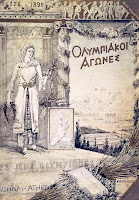
- 241 athletes
- 10 sports, 43 events (Athletics, cycling (road and track), fencing, gymnastics, shooting, swimming, tennis, weightlifting, and wrestling)
- Main Stadium was the Panathenaic Stadium
- Opened by King George of Greece
- The US won the most Gold Medals (11)
- Greece won the most overall medals (46)
- Winners were given silver medals while runner-ups were given copper medals (this was later adjusted in 1904 to include 3 medalists at gold, silver, and bronze)
- Highlight performances
- Marathon victory by Spyridon Louis of Greece
- Four medals for Carl Schumann of Germany in wrestling and gymnastics
- American James Connolly wins gold in the triple jump, silver in the high jump, and bronze in the long jump

1900 Paris
- 24 nations represented

- 997 athletes
- 21 sports, 95 events (new sports included archery, Basque pelota, cricket, croquet, equestrian, football, golf, polo, rugby, sailing, tug-of-war, and water polo)
- Main stadium was the Velodrome de Vincennes
- Women took part in the games for the first time
- This was a part of the 1900 World Fair also hosted by Paris at the time
- No opening or closing ceremonies were held
- The winners were not given medals yet rather cups and trophies
- There were many other competition events hosted by the World Fair that were not so much considered an Olympic sport such as kite flying and motor-racing
- Host nation France won the most medals at 111
- Highlight Performances:
- American Alvin Kraenzlein receives 4 gold medals in track-and-field
- American Ray Ewry won 3 gold medals in triple jump, high jump, and long jump

- 15 nations represented
- 651 athletes

- 17 sports, 95 events (the sport of boxing and the decathalon makes its debut)
- Main Stadium was Francis Field at Washington University in St. Louis
- Opened by David R. Francis (Mayor of St. Louis)
- Held in association to the 1904 World Fair
- Low attendance due to Russo-Japanese War and difficulty reaching the city of St. Louis
- United States won the medal count at 234
- Half of the participants of the marathon withdraw from the 24 mile race; it is eventually won by American Thomas Hicks
- Highlight performances:
- American gymnast George Eyser won 6 medals
- American Frank Kugler won 3 medals in 3 different sports (wrestling, weightlifting, and tug-of-war)
- American James Lightbody won 3 gold medals in the steeplechase, the 800m, and the 1500m
- American Harry Hillman won 3 gold medals in the 400m, 200m hurdles, and 400m hurdles
- American Archie Hahn won 3 gold medals in the 60m, 100m, and 200m
- American Ray Ewry repeated his 3 gold medal performances at Paris by sweeping in the triple jump, long jump, and high jump once again

- 22 nations represented (Debuts from Finland, Turkey, and New Zealand)
- 2008 athletes

- 22 sports, 110 events (Diving makes it's debut as well as new winter events of figure skating and hockey)
- Main stadium was White City Stadium
- Opened by King Edward VII
- The games were relocated to London after the Mount Vesuvius eruption in Rome
- The longest modern day Olympics spanning a total of 187 days
- First events to include winter events
- The marathon distance of 26.2 was established and had a memorable performance by Dorando Pietri of Italy who was aided on his final lap in the stadium and subsequently disqualified
- Great Britain won the most medals at 146 total
- Highlight Performances
- John Taylor became the first ever African-American to win a medal at the olympics; he competed with the medley relay team
- American jumper Ray Ewry wins his last 2 gold medals in the high jump and long jump (making for a very impressive overall total of 8 gold medals throughout his career)

- 28 represented nations (Japan debuts as first ever Asian nation at the Olympic games; Egypt, Iceland, Portugal, Chile, and Armenia also make their debut)

- 2406 athletes
- 18 sports, 102 events (introduction of pentathlon and baseball)
- Main stadium at Stockholms Olympiastadion
- Opened by King Gustaf V
- Sweden won the most medals with 65 total
- First games that have electronic timing
- First games in which an athlete dies during competition (Francisco Lazarro in the marathon)
- The sport of boxing is banned by Sweden (the only time the sport is not included since it's inception)
- The young George Patton (who would later become the honorable general of WWI and WWII) represented the American military at the games and competed at the pentathlon although he did not medal
- Highlight Performances
- American Jim Thorpe wins gold in the decathlon and the pentathlon
- Finnish long distance superstar Hannes Kolehmainen wins 3 gold medals in the 5000m, 10,000m, and 12,000m runs.

1916 Berlin
- Cancelled due to WWI
- 29 nations represented (Germany, Hungary, Austria, and Bulgaria were banned from the games; Soviet Union chose not to attend; Argentina and Brazil made their debuts)

- 2626 athletes
- 22 sports, 156 events
- Main stadium at Olympisch Stadion
- Opened by King Albert I
- This was the introduction of the Olympic flag; notably the 5 rings that represents the world's continents united
- The United States won the most medals at 95
- Highlight Performances:
- Nedo Nadi of Italy won 5 gold medals in fencing
- Finnish long distance runner, Paavo Nurmi won 3 gold medals in the 10,000m, individual cross country, and the team cross country
- The American women swim team won gold in all 7 swimming events led by their superstar Ethelda Bleibtrey

- 44 nations represented (Debuts of Ecuador, Haiti, Ireland, Lithuania, Latvia, Poland, Uruguay)
- 3089 athletes

- 17 sports, 126 events (figure skating and hockey are removed for the Winter Olympics)
- Main stadium at Stade Olmpique Yves-du-Manoir
- Opened by President Gaston Doumergue
- This marked the inception of the Winter Olympics which was first held at Chamonix, France
- The introduction of the Closing Ceremony
- The introduction of the Olympic Village for athletes
- The "Flying Finns" dominated all the long distance running events
- The United States won the most medals at a total of 99
- Highlight Performances
- Pavo Nurmi won 5 gold medals for Finland in the 1500m, 5000m, individual cross country, team cross country, and team 3000m
- Ville Ritola won 4 gold and 2 silver medals for Finland in the 10,000m, 3000m steeplechase, 3000m team, team cross country; he finished 2nd behind Nurmi in the individual cross country and 5000m
- American swimmer Johnny Weismuller won 3 gold medals and a bronze medal in water polo
- British runners Eric Liddell and Harold Abrahams win gold in the sprinting events (which later inspires the film Chariots of Fire)
- American Harold Osborn set world records in the high jump and decathlon
- Roger Ducret won 5 medals for France in fencing

- 46 nations represented (Germany returned; Malta, Panama, and Rhodesia made their debut)
- 2883 athletes
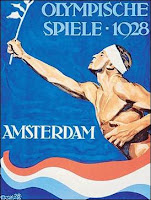
- 14 sports, 109 events (tennis was discontinued for the next 64 years)
- Main stadium at Olympisch Stadion
- Opened by Prince Hendrik
- This marked the introduction of the ceremonial lighting of Olympic Flame
- The traditional parade of nations began at the opening ceremony with Greece leading the procession and the host nation ending the procession
- The 400 meter track was introduced as the standard for all track-and-field events
- This was the first Olympic Games to be categorized as the "Summer Olympics" in contrast to the "Winter Olympics"
- United States won the most medals at a total of 56
- Highlight Performances:
- South American football makes it's global breakthrough, with Uruguay winning the gold
- The great Paavo Nurmi competes in his last games and wins 3 more medals; gold in the 10,000m and silver in the 5000m and 3000m steeplechase (making for a very impressive total of 12 medals)
- Canadian sprinter Percy Williams wins gold in the 100m and 200m sprint
- American swimmer Johnny Weissmuller returned to win 2 more gold medals and later became a movie star most notably in the role of Tarzan
- Mikio Oda of Japan wins the triple jump and becomes the first Asian to win a gold medal

- 37 nations represented (China and Colombia made their debuts)
- 1332 athletes

- 14 sports, 117 events (Does not include soccer; American football and lacrosse were demonstrated at these games yet never became official sports)
- Main stadium at the Los Angeles Memorial Coliseum
- Opened by Vice President Charles Curtis
- Many nations could not partake due to the global economic Great Depression
- Despite the Depression, the Opening Ceremony has the highest ever attendance at 100,000 spectators which becomes the new staple for Olympic ceremonies
- The victory medal podium was introduced for the first time
- Soccer was dropped for the first and only time due to a dispute with the newly established FIFA World Cup tournament
- United States won the medal count with a total of 103 medals
- Highlight performances:
- The Italian Romero Neri won three gold medals in gymnastics
- The American Helene Madison won three gold medals in swimming
- American Babe Didrikson won 2 gold medals in the javelin throw and 80m hurdles; and silver in the high jump

- 49 nations represented (Debuts from Afghanistan, Bermuda, Bolivia, Costa Rica, and Liechtenstein)

- 3963 athletes
- 19 sports, 129 events (Basketball, canoeing, and handball made their debut)
- Main stadium of Olympiastadion
- Opened by Chancellor Adolf Hitler
- Hitler used this event as a propaganda effort to demonstrate Nazi and racial supremacy (Jews were discouraged to participate in the games)
- The Opening Ceremony was attended by 100,000 spectators
- This was the first game that introduced the torch relay
- This was also the first ceremonial lighting of the Olympic Cauldron, by German runner Fritz Schilgen
- This was the first games to be televised, and included a significant documentary filmed by Leni Reifenstahl named Olympia.
- Germany won the most medals with 89 total
- Highlight Performances:
- American sprinter Jesse Owens wins 4 gold medals in the 100m, 200m, 4x100m relay, and the long jump
- The Germans dominated the equestrian events
- The American John Woodruff won gold in the 800m in one of the most exciting races ever
- The Italian football team won gold, to secure it's dominance also winning the World Cups of 1934 and 1938.
- American diver Marjorie Gestring becomes the youngest person to win a medal, at the age of 13

- Forfeited due to Second Sino-Japanese War; relocated to Helsinki
- Cancelled due to WWII
- Cancelled due to WWII
- 59 nations represented (Germany and Japan were banned from the games; 14 other nations made their debut; the Soviet Union chose not to partake)
- 4104 athletes

- 17 sports, 136 events
- Main stadium at Wembley Stadium
- Opened by King George VI
- Referred to as the Austerity Games, since Europe was still recovering economically from WWII
- 85,000 spectators at the opening ceremony at Wembley
- This was the first time starting blocks were used in the sprinting events
- United States won the most medals at 84
- Highlight Performances:
- Dutch sprinter Fanny Blankers-Koen won 4 gold medals in the 100m, 200m, 80m hurdles, and 4x100 relay (which was even more impressive since she was a mother of 2, that earned her the nickname "the flying housewife")
- Audrey Patterson was the first African-American woman to win a medal, by winning bronze in the 200m dash
- Alice Coachman shortly after became the first African-American woman to win a gold medal in the high jump

- 69 nations represented (Debuts by the Soviet Union, Israel, Vietnam, Thailand, and Indonesia; Germany and Japan were welcomed back to the games)
- 4955 athletes

- 17 sports, 149 events
- Main stadium Helingin, Olympiastadion
- Opened by President Juho Kusti Paasikivi
- Most World Records were broke at these games
- The famous Flying Finn runner, Paavo Nurmen lit the Olympic Torch in the Opening Ceremony
- United States won the medal count with 76 total barely edging out the Soviet Union (71); this was to become the start of a new Olympic rivalry and a part of their Cold War
- Highlight Performances
- Viktor Chukarin of the Soviet Union won 4 gold medals in gymnastics
- Czech runner Emil Zatopek won 3 gold medals in long distance running events including the 5000m, 10,000m, and the marathon

- 72 nations represented (China, Spain, Switzerland, Netherlands, and Egypt boycotted the games due to various political differences)

- 3314 athletes
- 17 sports, 151 events
- Opened at Melbourne Cricket Ground
- Opened by Prince Philip, The Duke of Edinburg
- The games were boycotted by several nations due to the Israeli-Palestine tensions in the Suez Crisis, and the Soviet invasion of Hungary
- This was the first time the closing ceremony had all the nations parade together, a tradition that still holds today to represent world unity
- The equestrian events were held in Sweden due to strict Australian quarantine regulations
- The Soviet Union won the most medals at 98 total
- Highlight Performances
- Due to their political tension, the polo match between Hungary and the Soviet Union was fierce and known as "The Blood in the Water match"; Hungary won 4-0 and would later win the gold medal in the event.
- Australian Betty Cuthbert became the host nation's golden girl by winning 3 gold medals in track events (100m, 200m, 4x100m relay)
- American sprinter Bobby Morrow won 3 gold medals in 100m, 200, and 4x100m relay

- 83 nations represented (Debuts from Morocco, San Marino, Sudan, and Tunisia)
- 5338 athletes

- 17 sports, 155 events
- Opened at the Stadio Olimpico
- Opened by President Giovanni Gronchi
- Danish cyclist Knud Enemark Jensen collapsed and died during her race due to heat stroke
- The debut of the Olympic Anthem (not to be confused with the American theme song "Olympic Fanfare" composed by John Williams at the 1984 games
- The Soviet Union once again won the most medals at 103
- Highlight Performances
- Swedish canoer Gert Fredriksson won his 6th gold medal
- Hungarian fencer Aladar Gerevich won his 7th gold medal at 6 different games
- Danish sailor Paul Elvstrom won his 4th consecutive gold medal
- American sprinter Wilma Rudolph won 3 gold medals in the 100m, 200m, and 4x100m relay and set new world records to be referred to as the fastest woman in the world
- Abebe Bikila of Ethiopa became the first African gold medalist by winning the marathon (of which he ran barefooted)
- The great boxer Cassius Clay (later known as Muhammad Ali) won gold in the heavyweight boxing

- 93 nations represented (South Africa banned due to it's apartheid system; debut of 16 countries including Algeria, Cameroon, Ivory Coast, and Senegal)
- 5151 athletes

- 19 sports, 163 events (Debut of Judo and Volleyball)
- Opened at National Stadium
- Opened by Emperor Hirohito
- This was the first time the games were held in Asia and marked the return of the Japanese global economy following their downfall after WWII
- First games to be broadcast in color, and renown for it's groundbreaking documentary film, Tokyo Olympiad directed by Kon Ichikawa
- Yoshinori Sakai, a sprinter and survivor of the Hiroshima bombing lit the Olympic torch
- Soviet Union once again won the most medals at 96 (however the United States won the most gold medals)
- Highlight Performances:
- Soviet gymnast Larisa Latynina competed in her 3rd Olympic games and gathered 5 more medals to add to her career total of 18 Olympic Medals (this record stood for nearly 50 years until it was passed by Michael Phelps)
- Czech gymnast Vera Caslavska won 3 gold medals
- Abebe Bikila of Ethiopa returned to defend his gold title in the marathon
- American swimmer Sharon Stouder won 3 gold and a silver medal
- American sprinter Bob Hayes won 2 gold medals in the 100m and 4x100m relay, and later played professional football for the Dallas Cowboys
- American boxer Joe Frazier won gold in the heavyweight event
- Native American Billy Mills wins a thrilling gold medal in the 10,000m run

- 112 nations represented
- 5516 athletes

- 18 sports, 172 events
- Opened at the Estadio Olimpico Universitario
- Opened by President Gustavo Diaz Ordaz
- This was the first games hosted by a Latin American nation
- Mexican sprinter Enriqueta Basilio became the first woman to light the Olympic torch
- The games were held in the fall for cooler weather
- This was also in the midst of a labor protest known as the Mexican Student Movement in which hundreds were massacred in Tlatelolco shortly before the start of the games.
- The most iconic image of the game was the Black Power Salute on the podium by American sprinters Tommie Smith and John Carlos who finished 1st and 3rd in the 200m dash
- This was the first Olympics to use all-weather rubber running track surface opposed to the prior cinder track
- This also marked the introduction of doping tests (the first disqualified athlete was Swedish pentathlete Hans-Gunnar Liljenwell who drank several beers before competing)
- This also marked the beginning of Kenyan/Ethiopian dominance in the long distance events
- The United States won the most medals at 107
- Highlight Performances:
- Vera Caslavska won 4 gold medals and 2 silver models in the gymnastic events and protested against the Soviet invasion during her award ceremonies
- George Foreman won the heavyweight boxing gold medal for America
- American Al Oerter won his 4th consecutive gold medal in the discuss throw
- Bob Beamon won gold in the long jump and set the world record that stood for 23 years
- Dick Fosbury won the gold in the high jump and introduced his iconic Fosbury flop which is still the technique used today
- American swimmer Debbie Meyer won 3 gold medals in the 200m, 400m, and 800m freestyle

- 121 nations represented (11 nations made their debut including North Korea and Saudi Arabia)
- 7134 athletes
- 21 sports, 195 events (new debuts of slalom canoeing, kayaking, indoor handball, and the return of archery)

- Opened at the Olympiastadion
- Opened by President Gustav Heinemann
- This was Germany's chance to show off an optimistic representation of their heritage after the dark years of the Nazi Regime. The event was marketed as the "cheerful games" however tragedy quickly flipped that moniker.
- The event was overshadowed by the Munich massacre in which 11 Israeli athletes were held hostage and eventually killed by a Palestine terrorist organization known as Black September
- The first official mascot was introduced, a wienerdog named Waldi
- The revolutionary Olympic Park was designed with modern acrylic glass; it brought the venues, villages, and other forms of entertainment all within close walking proximity.
- Soviet Union won the medal count at 99 (with US shortly behind at 94)
- Highlight Performances:
- American swimmer set a new record by collecting 7 gold medals at one Olympic Games event (this record was later beaten by Michael Phelps who collected 8 at Beijing)
- Soviet gymnast Olga Korbut won 4 golds and a silver
- The United States lost to Soviet Union in a very controversial basketball game
- Valeriy Borzov won gold the 100m, 200m and silver in the 4x100m relay for the Soviet Union
- The Flying Finn's returned at long distance with Lasse Viren winning gold in the 5000m and 10,000m

- 92 nations represented (29 African nations boycotted the games to the allowance of New Zealand who had
- 6084 athletes

- 21 sports, 198 events
- Opened at Olympic Stadium
- Opened by Queen Elizabeth II
- The Olympic cauldron was lit by Canadian athletes Stephane Prefontaine and Sandra Henderson
- Soviet Union won the most medals at 125 total
- Highlight Performances:
- This was the famous perfect 10 performance from Romanian gymnast Nadia Comaneci in the all around competition. She won 3 golds and a silver in the team event.
- Alberto Juantorena of Cuba became the first runner to win gold in both the 400m and 800m runs
- Finnish runner Lasse Viren won gold in the 5000m and 10,000m
- Five great American boxers won gold medals including Sugar Ray Leonard, Leon Spinks, Michael Spinks, Leo Randolph, and Howard Davis
- Japanese gymnast endured a broken knee to help his team win gold in gymnastrics
- Bruce Jenner won the gold in the decathalon (and then many years later had famous sex change to become known as Caitlyn Jenner)

- 80 nations represented (66 countries boycotted including the United States due to the Soviet-Afghan war)
- 5179 athletes

- 21 sports, 203 events (synchronized swimming and rhythmic gymnastics debuted)
- Opened at the Grand Arena of the Central Lenin Stadium
- Opened by Chairman Leonid Brezhnev
- Cauldron lit by Russian basketball player Sergei Belov
- The western nations that boycotted the games hosted their own special "Liberty Bell Classic" in Philadelphia mostly for athletics
- Many world records were set at these games but there was also many instances of doping
- Soviet Union won the most medals at 195
- Highlight Performances:
- Ethiopian Miruts Yifter won gold in the 5000m and 10,000m run
- Soviet gymnast Alexander Dityatin won 8 gold medals in the gymnastic events (the most ever at a games, until equaled by Phelps)
- The great Nadia Comaneci won 4 more medals in gymnastics including 2 gold and 2 silver
- Vladimir Salnikov won 3 gold medals for the Soviet Union in swimming

- 140 nations represented (14 nations of the Eastern Bloc boycotted the game, including the Soviet Union)
- 6829 athletes

- 21 sports, 221 events
- Opened at Los Angeles Memorial Coliseum
- Opened by President Ronald Reagan
- Cauldron was lit by American decathlete Rafer Johnson
- This was considered one of the most profitable of the games, since Los Angeles had already hosted in 1932, they had most the venues already in place (223$ million profit)
- John Williams composed the iconic "Olympic Fanfare" at these games which has ever since accompanied NBC's programming of the games
- This was the first running of the women's marathon, won by American Joan Benoit
- The soccer tournament was won by France, and brought major attendance at each game which convinced the US to host the FIFA World Cup in 1994.
- This was the debut of the women's 3000m run which was loaded with controversary after the American favorite Mary Decker was clipped by South African Zola Budd, and the Romanian Maricica Puica won the gold
- The United States won the most medals for the first time since 1968, with a total of 174
- Highlight Performances:
- This was the arrival of the great track star Carl Lewis, who equaled Jesse Owen's 4 gold performance in the 100m, 200m, 4x100m, and long jump.
- Carlos Lopes of Portugal won the marathon and set the Olympic record that stood for 24 years
- American Mary Lou Retton won a total of 5 medals, including gold in the all-around competition of which she equaled Nadia Comaneci's perfect 10 performance
- Li Ning of China won a total of 6 medals, including 3 gold medals

- 159 nations represented (Soviet Union returned, however several socialist nations boycotted the games including North Korea and Cuba)
- 8391 athletes

- 23 sports, 237 events (tennis returned after 64 year hiatus, and table tennis makes it's debut)
- Opened at Seoul Olympic Stadium
- Opened by President Roh Tae-Woo
- Cauldron lit by long distance runners Sohn Kee-Chung, Chung Sun-Man, and Kim Won-tak
- Soviet Union won the medal count at 132 total medals
- Highlight Performances:
- Soviet gymnast Vladimir Artemov won 4 gold medals
- Romanian gymnast Daniela Silivas won 6 medals, including 3 golds, and equaled Nadia Comaneci's 7 perfect 10's record
- Florence Griffith-Joyner won 3 gold medals in the 100m, 200m, and 4x100m and set the world record in the 100m dash that still stands to this day.
- American diver Greg Louganis won 2 gold medals
- German swimmer Kristin Otto won 6 gold medals
- American swimmer Matt Biondi won 7 medals (including 5 gold medals)
- Jackie Joyner-Kerse wins gold medals in the heptathlon and long jump
- Steffi Graff won the gold medal for Germany in tennis achieving the rare Career Golden Slam (American Pam Shriver also achieved this feat at the same games, however in the doubles event)

- 169 nations (South Africa re-invited to games after apartheid ends; debut of newly established nations such as Croatia, Bosnia, and Slovenia)
- 9356 athletes
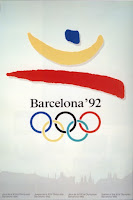
- 25 sports, 257 events (baseball, badminton, and judo became official sports)
- Opened at Estadio Olimpic de Montjuic
- Opened by King Carlos I
- Cauldron lit by archer Antonio Rebllo
- Due to the recently disbanded Soviet Union, a Unified Team was assembled which consisted of Soviet and Baltic athletes
- Allowance of professional athletes to play in basketball tournament gave way to the iconic American "Dream team" which included Michael Jordan, Larry Bird, Magic Johnson, and many other NBA superstars
- The Unifed Team won the most medals at 112 total
- Highlight Performances:
- Spanish distance runner Fermin Cacho became the star for his home country by winning gold in the 1500m
- Vitaly Scherbo of Belarus won 6 gold medals in gymnastics
- Hungarian swimmer Krisztina Egerszegi won 3 gold medals in swimming
- British sprinter Derek Redmond pulled his hamstring during a semi-final race, and was aided by his father to finish the race, making for a very iconic Olympics moment.
- American Gail Devers was the favorite to win the womens 100m hurdle however tripped over the last hurdle to finish 5th place. She still won gold however in the 100m dash
- The American Dream team easily won the gold medal, it what has become one of the most dominant performances in the Olympic basketball history

- 197 nations represented (24 new nations made their debut stemming from the collapse of the Soviet Union)
- 10,320 athletes

- 26 sports, 271 events (beach volleyball, mountain biking, softball made their debuts)
- Opened at the Centennial Olympic Stadium
- Opened by President Bill Clinton
- Cauldron lit by Muhammad Ali
- This was the first year the Winter Olympics were held in a different year to alternate with the Summer Olympics
- A terrorist pipe bomb went off at the Centennial Olympic Park that killed two people and injured 111 people
- This was the first performance of John Lennon's song "Imagine" which has now become a traditional song performed at the Olympic opening ceremonies.
- The United States won the total medal count at 101
- Highlight Performances:
- American sprinter Michael Johnson arrived to the stage and won gold in the 200m and 400m dash (with a world record in the 200m dash)
- French sprinter Marie-Jose Perec also won the 200m and 400m dash gold for the women's event
- American tennis player Andre Agassi won gold and achieved the golden slam of 4 grand slams and the Olympic medal
- Canadian sprinter Donovan Bailey won gold in the 100m dash with a new world record
- Amy Van Dyken won 4 gold medals in swimming
- This was the last game Carl Lewis competed in and incredibly defended his gold in long jump for the 4th time
- The American's women team "known as the Magnificent Seven" won the gymnastic gold medal, lead by the heroic performance by Kerri Strug he strained her ankle and the adorable Dominique Moceanu

- 199 nations
- 10,651 athletes

- 28 sports, 300 events (debut of the triathlon and taekwondo)
- Opened at Stadium Australia
- Opened by Governor-General Sir William Deane
- Cauldron lit by Australian sprinter Cathy Freeman
- These Olympic games were acclaimed as the most entertaining and successful of all games by most critics
- United States won the medal count at 93
- Highlight Performances:
- Cathy Freeman of Australian being the icon star of her nation won gold in the 400m dash; she became the first person to light the cauldron and win a gold medal at the same games; she won her gold medal race in front of a record attendance of 112,5000 spectators
- Ian Thorpe (aka the "Thorpedo") of Australia won 5 medals in swimming (3 of which were gold)
- Michael Johnson defended his 400m title for the 2nd time
- Maurice Greene won gold in the 100m and 4x100m relay
- Marion Jones wins 5 medals but loses them in 2007 after failing doping tests
- Michael Phelps competes in his first Olympics at the age of 15 but does not medal

- 201 nations represented
- 10,625 athletes

- 28 sports, 301 events
- Opened at Olympic Stadium
- Opened by President Konstantinos Stephanopoulos
- Cauldron lit by sailing champion Nikolaos Kaklamanakis
- The games brought significant infrastructure improvements to the city of Athens, however is later blamed to be the cause of their economic crisis in 2008.
- Several of the events were hosted at ancient sites and venues such as the Panathenaic Stadium
- United States won the medal count at 101
- Highlight Performances:
- Michael Phelps bursts onto the world stage of swimming by winning 8 medals (6 gold and 2 bronze)
- Brazilian marathon runner, Vanderlei Cordiero de Lima was attacked by an Irish marathon runner, yet still managed to win the bronze medal
- British runner Kelly Holmes won gold in the 800m and 1500m
- Chinese hurdler Lui Xang wins the 1st ever gold medal in track and field for China
- Hicham el Guerroj of Morocco wins the gold in the 1500m and 5000m
- The United States has a poor performance in basketball and wins the bronze while Argentina win the gold
- Gymnast Carly Patterson wins 3 medals, including the gold for the all-around performance
- Usain Bolt competes in his first Olympics however does not medal
- Lionel Messi makes his international debut to lead Argentina to winning the gold medal in football

- 204 nations represented
- 10,942 athletes
- 28 sports, 302 events (debut of BMX cycling)

- Opened at Beijing National Stadium (The Bird's Nest)
- Opened by President Hu Jintao
- Cauldron lit by gymnast Li Ning
- The opening ceremony was on a grand scale with thousands of performers, fireworks, and special effects. It was a massive success and considered one of the greatest opening ceremonies in Olympics history; it was also the most expensive
- The venues of the Nest and the Water Cube were very unique and cutting edge architecture
- Michael Phelps and Usain Bolt stole the show with their golden performances
- Many Olympic records and world records were broke at this game
- The US won the most medals at a total of 112, China had 100
- Highlight Performances
- Michael Phelps became a superstar at these games and broke all sorts of world and Olympic records with his performance. He won 8 gold medals in each of the events he competed in, and broke Mark Spitz's 7 gold performance at Munich 1972
- Usain Bolt of Jamaica also burst onto the stage as the fastest man in the world. He broke various world records as he won gold in the 100m, 200m, and 4x100m relay
- The Chinese women won the team gymnastics, while Americans also performed well; Natsia Lukin won the individual competition and went home with 5 medals; Shawn Johnson went home with 4 medals including gold in the balance beam
- Raphael Nadal won gold in the tennis event, while Roger Federer won gold in tennis pairs with his partner Stanislas Warwinka
- The US Men's basketball team assembled one of the greatest superstar line-ups since 1992, consisting of Kobe Bryan, Lebron James, and Dwayne Wade. After their failure in 2004 the men's team was referred to as the "Redeem Team" and dominated the tournament to win gold

- 204 nations represented
- 10,768 athletes

- 26 sports, 302 events (debut of women's boxing)
- Opened at London Olympic Stadium
- Opened by Queen Elizabeth II
- Cauldron lit by 7 young Olympians
- Opening ceremony was once again on a very grand scale; the iconic Tower Bridge was illuminated with the Olympic Rings for the duration of the games
- South African sprinter Oscar Pistorius became the first amputee to compete in the games, in the 400m however this was controversial due to the use of the springy running blades; he only made it as far as the semi-finals however
- United States won the most medals at 104
- Highlight Performances:
- Michael Phelps collected 6 more medals (4 gold and 2 silver) and set the new record at 22 for most medals by an Olympian
- Usain Bolt defended his 3 gold medals in the 100m, 200m, and 4x100m relay
- Missy Franklin won 4 gold medals and a bronze medal with her specialty being the backstroke
- The US women's gymnastic team were referred to as the "Fierce Five" led by Aly Raisman, Gabby Douglas, Makayla Maroney and won the gold medal
- British distance runner Mo Farah won the gold in the 5000m and 10,000m
- Shelly Ann Fraiser of Jamaica defended her gold in the 100m dash, and won 2 silvers in the 200m and 4x100m relay
- Katie Ledecky also made her debut at these games winning her first gold in the 800m freestyle
- British Jessica Ennis-Hill was the face of her host nation and won gold in the heptathlon
- American sprinter Allyson Felix had an impressive performance with 3 gold medals in the 200m, 4x100m relay, and 4x400m relay
- In women's beach volleyball the iconic duo of Misty May-Treanor and Kerri Walsh won their 3rd consecutive gold medal in the event

- 207 nations represented
- 11,238 athletes

- 28 sports, 306 events (Rugby and Golf made their return)
- Opened at the Maracana Stadium
- Opened by Vice President Michel Temer
- Cauldron lit by Brazilian long distance runner Vanderlei Cordeiro de Lima
- This was the first games held in South America and the 2nd by Latin America (since Mexico 1968)
- Brazil had successfully hosted the World Cup in 2014, however there were still fears regarding construction delays and the outbreak of a mosquito Zika virus
- American Muslim and fencer, Ibtihaj Muhammad became the first women to compete in a hijab
- More than 100 Russians were banned for doping
- The United States won the most medals at 121
- Highlight Performances:
- Michael Phelps won 5 more gold medals and a silver medal to set his all-time Olympic record at 28 total medals.
- Usain Bolt defended his sprinting titles for a 3rd consecutive Olympic games winning gold once again in the 100m, 200m, and 4x100m relay
- Simone Biles burst onto the stage with her dominant performance in gymnastics. She won 4 gold medals in the team, individual all-around, vault, and floor exercise; and bronze in the balance beam
- Katie Ledecky also had a dominant performance in the pool winning 4 gold medals and a silver medal
- Simone Manuel became the first African-American to win gold in the swimming events (she won a total of 4 medals including 2 gold and 2 silver)
- Kenyan runner David Rudisha defended his golden title in the 800m dash
- Jamaican sprinter Elaine Thompson-Herah dethroned her compatriot Shelly-Ann to become the new female champion in the sprints. She won gold in the 100m, 200m and silver in the 4x100m relay
- South African sprinter Wade van Neikerk won gold in the 400m, and set a new WR (dethroning the great Michael Johnson). What was especially impressive about this race was that he was in the outside 8th lane.
- Ashton Eaton defending his title in the decathlon


