Thursday, January 26, 2017

Architecture: Top 10 Towers

As I've begun to make these lists and study on some of the greatest monuments in the world, I keep wanting to add more categories. Therefore I've decided to include the categories of towers, castles, stadiums, and statues to my blog. In this study I'm going to focus on the greatest towers, which are to be separated from skyscrapers. Many of these towers are included among the tallest standing structures in the world.

Towers are generally thin structures that are built very tall and serve a general purpose as an observational lookout. This was first incorporate as a military tactic among ancient walls and castles. Now they are mostly built as city lookouts or monumental points of tourism. Obelisks and minarets have similar structures yet their purpose is different in that they are built as monuments of honor, such as the Washington Monument for example. In this post I will exclude one of the most famous of towers, The Eiffel Tower, because I have already listed it as my favorite modern wonder.

My Top Ten Favorite Towers

Honorable Mention: Washington Monument

Culture: American
Year Constructed: 1884
Designed by: Robert Mills
Purpose: Classical Monument
Height: 555 feet
Location: Washington DC
Significance: Since the structure of an obelisk is very similiar to that of a tower or a minaret I decided to include this iconic monument in this list of towers. It is by far the most famous of obelisks in the world. Standing at a resounding 555 feet, it surpassed the Cologne Cathedral as the tallest standing structure in the world in 1884. It was later surpassed by the Eiffel tower in 1889. To this day it remains the tallest stone structure and obelisk in the world. It is an iconic symbol of Washington DC and American government.


10. Ostankino Tower

Culture: Russian
Year Constructed: 1967
Designed by: Nikolai Nikitin
Purpose: Observation, Telecommunications, Tourism
Height: 1772 feet
Location: Moscow, Russia
Significance: During the height of the Soviet Union it was built int 1967 and surpassed the Empire State Building as the tallest standing structure in the world. (Which it was later surpassed by the CN Tower in 1976). To this day it remains the tallest standing structure in Europe and the 8th tallest structure in the world. It was built as an observation and telecommunications tower, but also a commemoration to mark the 50th year anniversary of the October Revolution.


9. Minaret of Jam

Culture: Afghanistan
Year Constructed: 1190
Commissioned by: The Ghurid Dynasty
Purpose: A religious monument
Height: 203 feet
Location: Ghor Province, Afghanistan
Significance: It is an ancient structure that is believed that have been once a part of a mosque honoring the Ghurid dynasty and the spread of Islam. What makes the tower so unique is it's inscriptions, coloring, and geometric shapes. The tower displays artistic calligraphy throughout it's structure quoting passages from the Qur'an. It is world landmark yet also in danger of corrosion and collapse.


8. Great Mosque of Samara

Culture: Abbasid Caliphate (Iraqi)
Year Constructed: 851
Comissioned by: Al-Mutawakkil
Architectural Style: Abbasid
Height: 162 feet
Location: Samarra, Iraq
Significance: It was built in 851 by the Abbasid Caliphate as one of the largest mosques in the world. It's iconic feature was the spiral tower connected to it, which stands to this day as an ancient wonder of the Middle East. This minaret was constructed of sandstone and incorporates a unique design of a wide spiraling staircase. The mosque itself was destroyed in 1278 after the Hulagu Khan invasion of Iraq. All that remains is the outer wall and this iconic tower.


7. CN Tower

Culture: Canadian
Year Constructed: 1976
Designed by: WZMH Architects
Purpose: Observation, Tourism, Telecommunications
Height: 1815 feet
Location: Toronto, Canada
Significance: Upon it's construction in 1976 it surpassed the Ostankino tower as the tallest standing structer in the world. A title it would retain until the Burj Kalifia was completed in 2010. It still remains the 7th tallest standing structure in the world and is considered one of the 7 wonders by the American Society of Civil Engineers. It dominates the Toronto skyline and has become one Canada's most iconic monuments.


6. Oriental Pearl Tower

Culture: Chinese
Year Constructed: 1994
Designed by: Jiang Huan Chen, Lin Benlin, Zhang Xiulin
Purpose: Telecommunications, Hotel, Observation, Tourism, Restaurant
Height: 1535 feet
Location: Shanghai, China
Significance: Upon it's construction in 1994 it became the tallest standing structure in China until it was surpassed by the Shanghai World Financial Center. To this day it is the 5th tallest tower in the world. It's design is very modern and unique from other modern towers. It's most iconic features are the giant two spheres that make up the base and the top. The base also has a tepee support structure unlike other towers. It soars over the booming Shanghai skyline alongside the Shanghai World Financial Center.


5. Qutb Minar

Culture: Indian
Year Constructed: 1220
Designed by: Delhi Sultanate
Material: Red Sandstone and Marble
Height: 240 feet
Location: Delhi, India
Significance: It is an ancient middle-eastern wonder, inspired by the Minaret of Jam. It is the 2nd tallest brick minaret in the world after Fateh Burj. The tower is a part of the Qtub Complex, a series of tombs and monuments which honor Indian sultans. Inside the tower there is a circular staircase that leads to the top. The bottom columns have intricate designs and calligraphy with passages from the Qur'an. It is a striking landmark of Indian culture.


 4. Galata Tower

Culture: Turkish
Year Constructed: 1348
Designed by: Ottoman Empire
Architectural Style: Romanesque
Material: Stone
Height: 219 feet
Location: Istanbul, Turkey
Significance: Upon it's construction in 1348 it was the tallest structure in the capital city Istanbul of the Ottoman Empire. It was built as a replacement of another tower and part of an expansion of the then city of Constantinople. It is built of stone and offers a lookout point throughout the large city and peninsula. It is one of the most historical and iconic landmarks in the present city of Istanbul.


3. Canton Tower

Culture: Chinese
Year Constructed: 2009
Designed by: Mark Hemel & Barbara Kuit
Height: 1954 feet
Location: Guangzho, China
Significance: Upon it's completion in 2009 it became the tallest tower in the world, until it was surpassed by the Tokyo Skytree in 2014. It is now the 2nd tallest tower and the 5th tallest freestanding structure behind the Burj Khalifa, Shanghai Tower, Tokyo Skytree, and Abraj al Bait. Is is a modern day wonder as it towers over the booming city of Guangzho, China. It has multiple uses as an observation point, telecommunications, tourism, and even a restaurant. The tower has a unique twist and waist structure with a wider base and top than it's middle. It has became a modern day landmark of Chinese culture.


2. Leaning Tower of Pisa

Culture: Italian
Year Constructed: 1372
Designed by: Bonanno Pisano
Architectural Style: Romanesque
Height: 183 feet
Location: Pisa, Italy
Significance: It is perhaps one of the most iconic towers in the world, famous not for it's height or design yet rather it's irregular slant. This infamous architectural error was noticed during construction as the foundation of one side of the tower was too soft, thus began the slight tilt. The tower was eventually stabilized however the tilt remains as one of it's most iconic features. Looking beyond it's tilt, the tower is actually quite a remarkable structure of Romanesque-classical pillar style. It's actually a part of the Pisa Cathedral, which is often overlooked by it's iconic leaning bell tower.

1. Tokyo Skytree

Culture: Japanese
Year Constructed: 2014
Designed by: Nikken Sekkei
Architectural Style: Neo-futuristic
Height: 2080 feet
Location: Tokyo, Japan
Significance: Upon it's completion in 2014 it became the tallest tower in the world, and 2nd tallest standing structure, behind only the Burj Khalifa. It's primary purpose is as a major broadcast site for Japanese telecommunication companies. However it also has multiple purposes for tourism, observation, and offers a restaurant. The design is an embodiment of Japanese style and extremely futuristic. It's defining feature is it's unique exterior lattice, which is painted in white yet often illuminated thru LED lights. The display of it's ever changing lights, it's incredible structure and height makes this one of the most awe-inpsiring monuments in today's modern world.

Tuesday, January 24, 2017

Architecture: Top 10 Skyscrapers

The last of this series of posts pertaining to my favorite works of architecture will be on skyscrapers. These iconic buildings are the sheer demonstration of mankind's resourcefulness. They are created with a sole purpose to provide capital in a booming markets. In today's ever expanding global economy, these buildings serve as the beacons of trade. Their immense height and design are true architectural wonders, and they have become iconic cultural landmarks.

My Top Ten Favorite Skyscrapers


10. One World Trade Center

Culture: American

Date of Construction: 2013
Designed by: David Childs
Architectural Style: Contemporary Modern
Height: 1776 feet
Location: New York City, USA
Significance: It was built as a replacement of the World Trade twin towers that were destroyed by terrorists in 2001. Standing at a resounding 1776 feet it is the tallest building in New York City, and the 6th tallest building in the world. It's design incorporates a framed tube structure with slight triangular crevices and a glass exterior. It has become a modern symbol of American architecture as well as freedom.


9. Abraj al Bait

Culture: Arabian
Date of Construction: 2011
Designed by: Dar Al-Handasah
Architectural Style: Postmodern
Height: 1972 feet
Location: Mecca, Saudi Arabia
Significance: It is currently the 3rd tallest building in the world and has become the modern day beacon of Islam. The unique design consists of a base of multiple buildings. From this base comes a giant main building with a clock tower and a crescent moon at it's top. The multi-plex building is almost a city within itself and sits at the center of the expanding sacred sity of Mecca. The purpose of this  extraordinary monument is to modernize the city for further sacred pilgrimage.


8. The Shard


Culture: British
Date of Construction: 2012
Designed by: Renzo Piano
Architectural Style: Neo-futurism
Height: 1016 feet
Location: London, United Kingdom
Significance: It is the tallest building in England and it's most modern wonder in a city of such classic architecture. It incorporates a pyramidal style, with a shimmering glass exterior. It dominates the London skyline looking over the River Thames, the London Bridge, and many more of it's iconic landmarks.


7. Shanghai Tower

Culture: Chinese
Date of Construction: 2015
Designed by: Jun Xia
Architectural Style: Post-modernism/Neo-futurism
Height: 2073 feet
Location: Shanghai, China
Significance: This incredibly modern design has become an iconic symbol of futuristic architecture. It is also the 2nd tallest building in the world behind the Burj Kaflia, and tallest building with usable floor. It incorporates a very unique twisting structure, with glimmering glass windows. It also has the world's fastest elevators. Rising over the Jin Mao Tower, the Oriental Pearl Tower, and the Shanghai World Financial Center it is the captain of one of the most tallest skylines in the world.


6. Chrysler Building

Culture: American
Date of Construction: 1930

Designed by: William van Allen
Architectural Style: Art Deco
Height: 1046 feet
Location: New York City, NY USA
Significance: In 1930 this revolutionary building surpassed the 40 Wall Street as the tallest building in the world. A record it would hold only for a year until it was surpassed by the similiar designed Empire State Building. The Chrysler Building is an ideal homage to the cultural boom from the 1920s that produced jazz and Art Deco. Its most defining feature is it's spire at the top, consisting of 7 layered arches with intricate steel design. It is one of the most iconic buildings in the New York City skyline. This one I have seen with my own eyes when we visited New York in 2005.


5. Petronas Towers

Culture: Malaysian
Date of Construction: 1998
Designed by: Cesar Pelli
Architectural Style: Postmodern
Height: 1483 feet
Location: Kuala Lumpur, Malaysia
Significance: In 1998 this striking structure surpassed the Sears Tower as the new tallest building in the world. It held this record for 6 years until it was surpassed by the Taipei 101 in 2004. It was a true eye-popping creation as it incorporated two giant towers connected with a bridge. It's structure was sheer modernism with it's multi-layered spire design. Each tower has large pinnacles shootings from the rooftop. This jaw dropping structure shares it's magnificence with the Kuala Lumpur tower, to dominate the skyline of a booming city.


4. Taipei 101

Culture: Chinese
Date of Construction: 2004
Designed by: CY Lee & Partners
Architectural Style: Postmodern
Height: 1671 feet
Location: Taipei, Taiwan
Significance:  This structure surpassed the Petronas Towers as the tallest building in the world in 2004, and held the title until it was surpassed by the futuristic Burj Khalifa in 2010. Compared to the Petronas Towers, the Taipei tower is a beautiful building of simplicity yet astonishment. It incorporates layered creases in it's structure with a defining light green color. The building consists of 10 segments of which at the top lies a tower with a sphere. It is one of the most iconic skyscrapers and a true cultural icon of Taiwan.


3. Willis Tower

Culture: American
Date of Construction: 1973
Designed by: Skidmore, Owings,, and Merrill
Architectural Style: International
Height: 1450 feet
Location: Chicago, IL
Significance: Upon it's completion in 1973 this monumental skyscraper surpassed the World Trade Center as the tallest building in the world. It held this honor for over twenty years until it was surpassed by the Petronas Towers in 1998. It's defining characteristics are it's black color and it's unique tubed structure. This revolutionary design was known as an international style that incorporated a bundled structure of multiple buildings merged into one. Along with it's giant antennas the building has dominated the Chicago skyline for some time now. It is a true wonder to behold. As a kid I always was inspired on trips to Chicago, when setting eyes on this giant wonder, in those days it was known as the Sears Tower.


2. Empire State Building

Culture: American
Date of Construction: 1931
Designed by: Shreve, Lamb, & Harmon
Architectural Style: Art Deco
Height: 1250 feet
Location: New York City, NY, USA
Significance: Upon it's construction in 1931 it became the tallest building in the world for nearly 40 years until it was surpassed by the Chrysler Building in 1970. It's architectural design was the definitive work of Art Deco that was most popular during the 1920s and 30s. The large pointed tip became the famous site of the groundbreaking film King Kong. To this day it has become a booming source of trade at the heart of New York City. It is the defining skyscraper of the New York City Skyline as well as an iconic American landmark. I have also seen this tower with my own eyes on our trip to New York in 2005.


1. Burj Kaflia

Culture: Dubai
Date of Construction: 2009
Designed by: Adrian Smith
Architectural Style: Neo-futurism
Height: 2717 feet
Location: Dubai, United Arab Emirates
Significance: In 2009 it shattered the previous tallest structure, Taipei 101 to became the undisputed tallest skyscraper in the world. To this day there is no structure that even comes close to comparison of the behometh 2717 feet tall Burj Kaflia. It is a sight of total wonder, a glimmering beacon of the future and a hommage to the ancient Tower of Babel. It incorporates elements from the Willis Tower, such as it's bundled structure, and from the Petronas Towers layered exterior. It dominates the modern global skyline of Dubai as a symbol of oil and Arabian wealth. It looks like something straight out of a fantasy such as Wizard of Oz. 

Thursday, January 19, 2017

Architecture: Top 10 Cathedrals

Now I move on to an architectural study of Cathedrals, and a list of my favorites. Each of these buildings could be considered wonders in their own right as they have become quite iconic of their culture. Cathedrals are monuments of praise and worship to the God Almighty and for that reason I hold them all the more dear. These structures demonstrate a brilliant artistic style that seeks to awe from inside and outside. They are mankind's architectural celebration and unification of faith. And it should probably go without saying that these pictures will never do it justice, and it is my dream and hope to someday see all these wonders with my own eyes.

My Top Ten Favorite Cathedrals


10. St. Pauls Cathedral

Culture: British
Denomination: Church of England
Date of Construction: 1675-1711
Designed by: Sir Christopher Wren
Architectural Style: English Baroque
Location: London, England
Significance: It was built with the major program in restoring the glory of London after the Great Fire of 1666. The lead architect Christopher Wren wanted to create something revolutionary a building that would dominate the London skyline for 300 years. Standing at 365 feet, it's dome is the highest in the world and it is the 2nd largest church in England. It serves as the center of the Church of England and has overseen many historic events such as the funerals of Lord Nelson, the Duke of Wellington, Sir Winston Churchill, Margaret Thatcher. It famously stood strong throughout the Nazi Blitz and was a point of celebration at the end of WWI and WWII.  


9. Cologne Cathedral

Culture: German
Denomination: Roman Catholic
Date of Construction: 1248-1473; 1840-1880
Comissioned by:
Designed by:
Architectural Style: Gothic
Location: Cologne, Germany
Significance: It was first constructed in the 1200 middle ages, however the project was abandoned in the 1400. It was later resumed in the 1800s due to a growing sentiment of romanticism. At it's completion in 1880 it became not only the tallest cathedral ever built yet also the tallest standing structure built by man, standing at 474 feet. This lasted for four years until it was surpassed by the Washington Monument. To this day the cathedral remains one of the most visited destinations in Germany. It has a certain dark Gothic appeal to it.


8. Westminster Abbey

Culture: British
Denomination: Roman Catholic
Date of Construction: 960-1090; 1245-1517
Commissioned by: King Edward the Confessor
Designed by: Henry Yevele
Architectural Style: Anglo-French Gothic Style
Location: London, England
Significance: It is one of the oldest and most famous cathedrals in Great Britain. Since 1066 every English monarch, except Edward V and Edward VIII have been crowned within it's walls. It was originally designed as a royal burial church for King Edward the Confessor yet later expanded to become England's greatest abbey. In the 18th century the design was furthered by the implementation of massive towers standing over 225 feet tall.


7. St. Peter's Basilica

Culture: Italian
Date of Construction: Roman Catholic
Comissioned by
Designed by:
Archiectural Style: Renaissance
Location: Vatican City, within Rome
Significance: It is the center of all Christianity, the church of churches where the pope resides. It is also the largest church in the world taking up an area of 21,000 meters. It's dome, pillars, and many sculptors are iconic representations of the Italian Renaissance. This church is a center of spiritual and artistic wonder.


6. Hagia Sophia

Culture: Turkish
Denomination: Eastern Orthodox
Date of Construction: 532-537
Commissioned by: Byzantine Emperor Justinian
Designed by: Isidore of Miletus
Architectural Style: Byzantine architecture
Location: Istanbul, Turkey
Significance: This religious monument has undergone many political and spiritual transformations since it first broke ground. It began as a monumental Eastern Orthodox cathedral and seat of Patriarch of Constantinople. However during the crusades it was converted into a Catholic cathedral for nearly 50 years. It was later converted into an Ottoman Mosque. It's design is most famous for it's dome and was the largest cathedral for nearly a thousand years until it was surpassed by the Seville Cathedral in 1520.


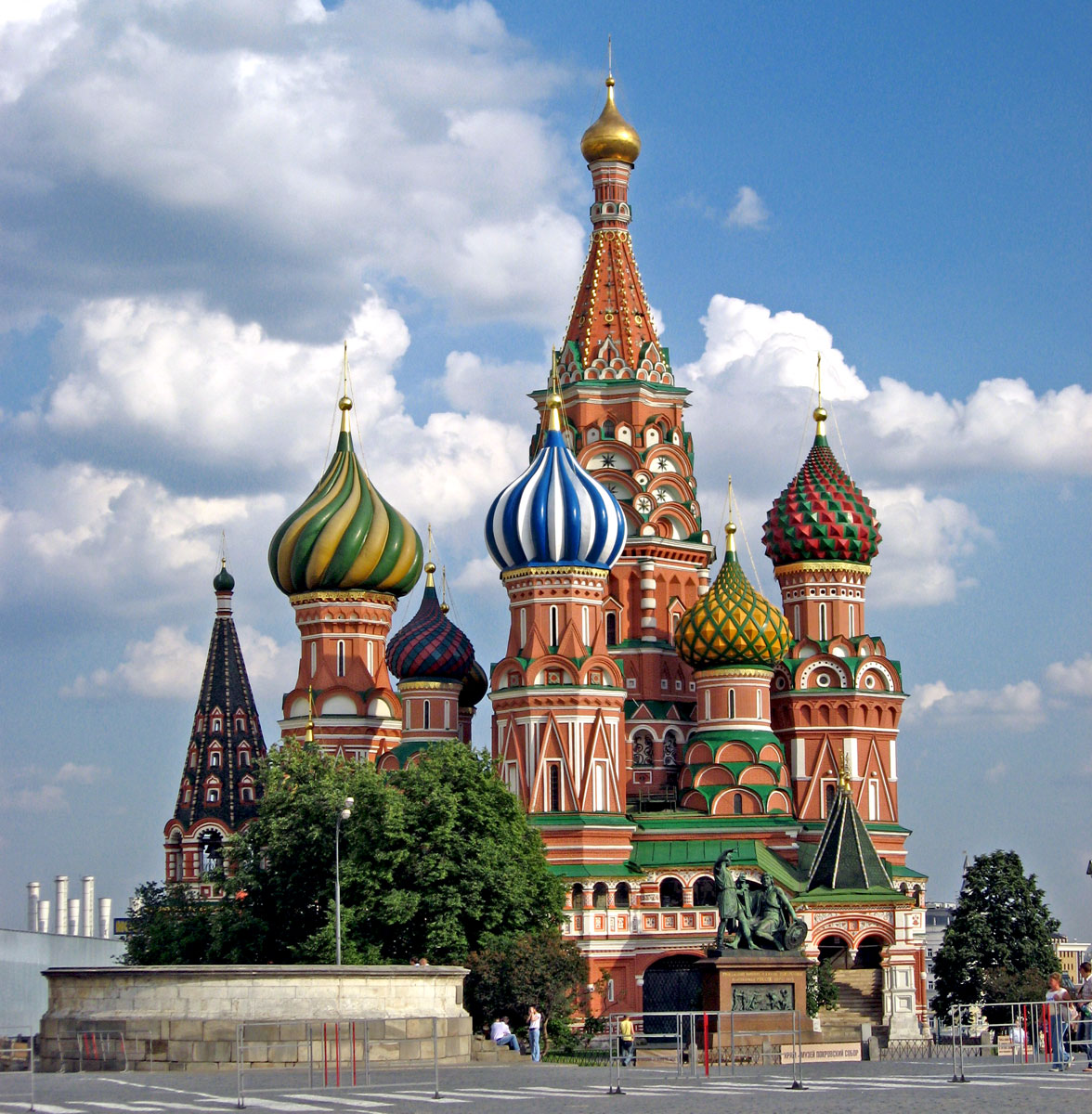
5. Saint Basil's Cathedral

Culture: Russian
Denomination: Eastern Orthodox
Date of Construction: 1555-1561
Comissioned by: Ivan the Terrible
Architectural Style:
Location: Moscow, Russia
Significance: It has become one of the iconic momnuents of Russian culture. It is so unique, colorful, and majestic that it appears as some sort of fantasy toy facility. Yet instead it is a monumental cathedral comissioned by the tsar Ivan the Terrible to commemorate his military victories. It is artisticaly designed as a flame that is rising in the sky. It's unique conception and brilliant design has become one of Russia's most proudest cultural landmarks.


4. Santa Maria del Fiore

Culture: Italian
Denomination: Roman Catholic
Date of Construction: 1296-1436
Comissioned by:
Designed by: Arnolfo de Cambio
Architecural Style: Renaissance
Location: Florence, Italy
Significance: This cathedral became one of the most groundbreaking architectural structures of the renaissance. It is one of the iconic structures in the city of Florence, Italy with it's orange brick rooftops. It's greatest architectural feat was it's domed roof, which at it's time was the largest dome in the world.


3. Notre Dame

Culture: French
Denomination: Roman Catholic
Date of Construction: 1163-1345
Architectural Style: Gothic
Location: Paris, France
Significance: It is one of the most famous cathedrals in existence and an iconic landmark in the artistic city of Paris. It is a defining examle of French Gothic architecture and utilizes original sculptures throughout it's design. The gargoyle statues are some of the best recognized feats of this structure. During the French Revolution it was desecrated and served as the coronation of Napoleon in the early 1800s. It was later restored in 1845 where it still remains one of the finest standing cathedrals to this day.


2. Sagrada Familia

Culture: Spanish
Denomination: Roman Catholic
Date of Construction: 1882- 2028
Designed by: Antoni Gaudi
Archetural Style: Modernisme
Location: Barcelona, Spain
Significance: This unique design conceptulized by famed architect, Antoni Guadi, has become an iconic landmark of Barcelona. It demonstrates Spanish-Catalonian pride with it's fusion of Gothic and Art Nouveau styles. It's highest spires stand nearly 500 feet tall and it is schedule to be completed in the year 2028. It is one of the most modern cathedrals built, and has quickly gained admiration for it's inspirational  and extremely intricate design. I think it's a true wonder to behold, of which I hope to see with my own eyes some day.


1. Mount Saint Michael Abbey

Culture: French
Denomination: Roman Catholic
Date of Construction: 709-966
Comissioned by: Bishop of Avrances requested by Archangel Michael (according to legend)
Architectural Style: Gothic
Location: Mount Saint Michael, Normandy, France
Significance: This incredible abbey is submerged within a mountain on an island, whose sole purpose is for it's small feudal society. The construction is like some sort of medieval fantasy castle, consisting of an abbey at the top, monastery, great halls, and housing at the bottom. Most of the islands inhabitants are monks, farmers, and fishermen. During the French Revolution it served as a prison and was later restored in the 1900s. This structure served as the inspiration behind JR Tolkien's glorious city of Minis Tirith in the classic novel Lord of the Rings. It is one of my favorite religious cathedrals.  

Monday, January 9, 2017

Architecture: Top 10 Modern Wonders

I decided to separate the ancient wonders from the modern wonders for a few reasons. First it gave me more options to post about, yet second is the significant difference between the structures. By the 1700-1800s mankind had underwent a scientific-industrial revolution that completely changed the practice of architecture. Basic construction thus evolved from stone and bricks to steel and metals. While nothing should be taken away from the brilliance of the ancient wonders, these modern ones are the defining potential of architectural genius. They have each become cultural icons embedded into our society as a wondrous sight to behold.


My Top Ten Favorite Modern Wonders


10. Sydney Opera House

Culture: Australian
Date of Construction: 1959-1973
Designed by: Jorn Utzon
Location: Sydney, Australia
Purpose: To serve as a musical venue
Significance: It is a modern design that incorporates an expressionist style of architecture. The building serves as an entrance to the city of Sydney as it overlooks the harbor with great splendor. It houses numerous indoor venues for theater and concerts. This original structure has become one of the iconic symbols of Australia. From a far it looks like a futuristic boat sailing on the harbor.


9. Golden Gate Bridge

Culture: American
Date of Construction: 1937
Designed by: Joseph Strauss
Location: San Francisco, CA
Purpose: Links the city of San Francisco into Marin County over the San Francisco Bay
Significance: It is named the golden gate, because it's location on the Pacific Ocean serves as an entry way into the western coast of the United States. At 4200 feet, it was the longest suspension bridge for over 20 years, until it was surpassed in 1964. One of it's most identifiable characteristics is it's rich red color that is maintained on a regular basis.


8. Brandenburg Gate


Culture: German
Date of Construction: 1788
Comissioned by: King Frederick William II of Prussia
Designed by: Carl Gotthard Langhans
Location: Berlin, Germany
Purpose: It marked the start of the road from Berlin to the town of Brandenburg
Significance: The neoclassical structure is a remarkable sight to behold with it's large stone columns and it's Quadriga statue at the top. The gate was meant to symbolize peace with the Goddess Eirene drawing the chariot. It has become an iconic structure of German history and identity.


7. US Capitol Building

Culture: American
Date of Construction: 1800
Commissioned by: US Congress
Location: Washington, DC
Purpose: It was built as the home US Congress
Significance: This neo-classical building has become one of the iconic symbols of the American government. It's defining features are it's white pillars, it's dome, and the 365 steps to reach the doorway. It sits on top of a hill facing the Washington Monument and the White House.


6. Brooklyn Bridge


Culture: American
Date of Construction: 1883
Designed by: John Augustus Roebling
Location: Brooklyn, NY
Purpose: Connects the boroughs of Manhattan and Brookyln over the East River in New York
Significance: It was the first steel-wire suspension bridge ever constructed. Stretching at 1595 feet long it instantly became a monumental construction to behold. It is perhaps one of the most famous bridges ever constructed and has become an icon of New York City.


5. Palace of Westminster


Culture: British
Date of Construction: 1840
Commissioned by: British Parliament
Designed by: Charles Barry
Location: London, England
Purpose: Serves as the house of the British Parliament
Significance: After the 1st House of Parliament was destroyed in the London fire of 1834, a second one was built in it's place. Architect Charles Barry came up with a definite Gothic style, that served as a homage to old British Gothic castles from the middle ages. The building has today become an icon of British culture. It's Big Ben tower clock is one of the most recognizable features of the structure.


4. Neushwanstein Castle


Culture: German
Date of Construction: 1869
Comissioned by: King Ludwig II of Bavaria
Location: Hohenschwangau, Germany
Purpose: It was built as a retreat for the king as well as a homage to Richard Wagner
Significance: The site is the epitome of a classic fantasy, a castle sitting high up on the mountaintops. The King was a fond admirer of Wagner's music and wanted to create something in the likes of his sensational music. This castle is the embodiment of the romantic era, like a dream palace sitting at the top of the world. It has served as the inspiration behind Walt Disney's iconic logo and it's fairy tale stories.


3. Taj Mahal

Culture: Indian
Date of Construction: 1632- 1643 (11 years)
Comissioned by: Mughal emperor Shah Jahan
Style: Mughal Architecture
Location: Agra, India
Purpose: It was built as a mausoleum for the Mughal emperor's wife, Mumtaz Mahal.
Significance: It is considered the crowning jewel of Indian culture and architecture. It consists of a 42 acre complex with a mosque, guest house, and series of gardens. It's top point stands at 240 feet.


2. Christ the Redeemer Statue

Culture: Brazilian
Date of Construction: 1931
Commissioned by: Paul Landowski and Heitor da Silva Costa
Location: Rio de Janiero, Brazil
Purpose: A monumental symbol of Christianity
Significance: This behemoth sculpture of Jesus Christ is one of the most iconic symbols of Brasil as well as Latin American Christian culture. With his outstretched arms he is welcoming, blessing, and embracing all he look upon him. Standing 98 feet tall on a mountain top, the statue overlooks the incredible Rio de Janiero bay. It is made of concrete and soapstone and has become a modern monument of architectural sculpting.


1. Eifel Tower

Culture: French
Date of Construction: 1889
Designed by: Gustave Eiffel and Stephen Sauvestre
Location: Paris, France
Purpose: It was constructed as a monumental entrance for the 1889 World's Fair
Significance: It has become one of the most iconic structures in the world synonymous with French culture. At a resounding 1063 feet tall it stood as the highest man-mad structure for 41 years until it was surpassed by the Chrysler Building. To this day it is the most visited momentum in the world. I admire this structure the most for its simplicity yet also the complexity of it's construction.

Friday, January 6, 2017

Architecture: Top 10 Ancient Wonders

For some time now I've wanted to compile a list in this blog of my favorite architectural buildings. It is an art form that I have always admired yet never written much about. I feel that architecture is never fully embraced as an artform the same way as a painting or music. Perhaps it is because a building is sometimes overlooked by the sheer industry of which it represents. Yet on the contrary a built structure is a man made beacon of society that celebrates industry and culture at once.

I'm going to write a series of posts concerning the most famous of architecture. All of which is subjective to my personal preference of course. This first post will be my favorite ancient wonders, followed by modern wonders, cathedrals, and buildings. This study will give me a chance to better understand these incredible man made moments of culture and how they have lasted the test of time to truly become icons of an entire people.

Seven Wonders of the Ancient World


Before I begin to share my top ten favorite ancient wonders, I thought it fitting to begin with the 1st official list of wonders. These were the Seven Wonders of the Ancient World, constructed before the age of Christ. Today only one of the seven still stands.

Great Pyramids of Giza
Culture: Egyptian
Date of Construction: 2584 BC
Date of Destruction: Still Stands
Location: Giza, Egypt

Hanging Garens of Babylon
Culture: Babylonia
Date of Construction: 600 BC
Date of Destruction: 1st Century AD (unknown cause)
Location: Hillah, Iraq

Temple of Artemis
Culture: Greek
Date of Construction: 550 BC
Date of Destruction: 356 BC (Destroyed by Herosratus plundering)
Location: Selcuk, Turkey

Statue of Zeus
Culture: Greek
Date of Construction: 466 BC
Date of Destruction: 5th century AD (Destroyed by fire)
Location: Olympia, Greece

Colossus of Rhodes
Culture: Greek
Date of Construction: 292 BC
Date of Destruction: 226 BC (Destroyed by earthquake)
Location: Rhodes, Greece


Mausoleum at Halicarnassus
Culture: Greek
Date of Construction: 351 BC
Date of Destruction: 12th Century AD (Destroyed by earthquake)
Location: Bodrum, Turkey

Lighthouse of Alexandria
Culture: Greeks
Date of Construction: 280 BC
Date of Destruction: 1303 AD (Destroyed by earthquake)
Location: Alexandria, Egypt


My Top Ten Favorite Ancient Wonders


10. Chichen Itza

Culture: Mayan (Mexican)
Date of Construction: 8th Century (800 AD)
Location: Yucatan, Mexico
Purpose: It was an ancient city built by the Mayan people. At the center of the city was it's most iconic structure, El Castillo. This was a temple to the god Kukulkan
Significance: This city, most notably El Castillo have become iconic symbols of the Mayan culture. At it's height it was one of the largest Mayan cities ever built and a center for trade, worship, and art. The Castillo stands 79 ft high, with four stairways of 91 steps, and a final step at the top to bring a total of 365 steps. Which represents the number of days in the MesoAmerican Haab calender.


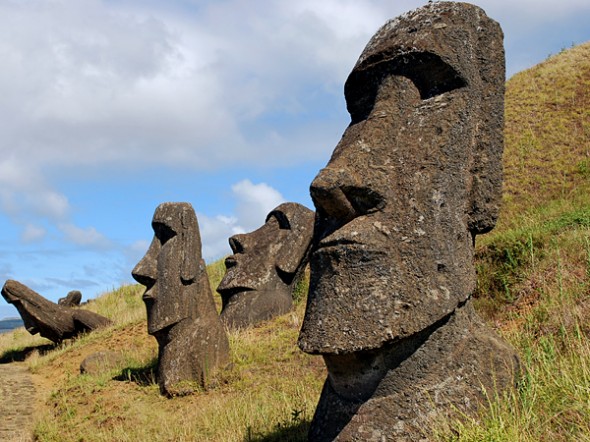
9. Moai of Easter Island

Culture: Rapa Nui (Chilean/Polynesian Natives)
Date of Construction: 1250-1500 (250 years)
Location: Easter Island, Chile
Purpose: They were built as monuments to past chiefs and ancestors. The larger the statue the larger significance the chief had.
Significance: This assembly of over 900 statues known as the Moai has been considered a remarkable achievment in architecture for it's craftmanship as well as it's transportation. The stone statues range up to 33 feet high and weigh over 82 tons and are scattered along hillsides of Easter Island. The defining characteristic of the statues are the extremely large faces that make up almost half of the statues.

8. Petra

Culture: Nabataeans (Arabians)
Date of Construction: 5th Century BC
Location: Ma'an, Jordan
Purpose: It was originally built as a temple for the gods and tombs for the king yet it grew into a city within a cave.
Significance: The most iconic part of this cave city, is the temple facade known as Al Khazneh. Carved on a mountain side it serves as an entrance into the wonder. The site is full of ancient history, mythology, and mystery. I remember first learning of this wonder after watching Indiana Jones: The Last Crusade.


7. Stonehedge

Culture: British
Date of Construction: 3000 to 2000 BC
Location: Wiltshire, England
Purpose: It is believed to have been constructed as a burial holy site.
Significance: The construction is as one of the oldest standing structures built by mankind. Along with the Pyramids come many questions of how they were built and what exactly was the purpose of this structure. Some theories often suggest it was a center of supernatural significance. While it is such a simple design of large standing stones, it's the questions that make it such a wonder. The questions of how and why it has stood for so long.


6. Great Wall of China

Culture: Chinese
Date of Construction: 7th century BC
Location: China
Purpose: It was primarily built as a method of defense against nomadic tribes. It also later served a purpose as a border control.
Significance: Beginning with it's construction in the 7th century the Chinese dynasties continued to expand the wall along the Chinese border. It reached it's height of creation during the Qin dynasty of 200 BC. In it's entirety the wall measures over 13,000 miles, spreading over hills, forests, and the vast lands of China.


5. Angor Wat

Culture: Hindu (Indian)
Date of Construction: 12th Century
Comissioned by: King Suryavarman
Location: Angor, Cambodia
Purpose: It was constructed by the Khmer Empire as a Hindu temple for the god Vishnu as well as the state temple and mausoleum. It later transformed into becoming a Buddhist temple.
Significance: The design has become a symbol of Cambodian Hindu identity. It is built as temple representing a mountain and a homage to the gods of Hindu mythology. It utilizes sandstone as the structure's material, with towers rising over 200 ft. At a resounding 402 acres it is the largest religious monument still standing at present day.


4. Great Pyramids of Giza 

Culture: Egyptian
Comissioned by: Pharoah Khufu
Date of Construction: 2584 BC (20 years)
Location: Giza, Egypt
Purpose: It is believed to have been built as a tomb for the Phaorah Khufu. It as was common practice for Egyptian royalty to be buried in great shrines in accordance to their beliefs of reincarnation.
Significance: It is the oldest man man structure standing for over 4000 years. At 481 feet tall it was the tallest man made structure for nearly 4000 years until it was surpassed in the year 1092 by the Lincoln Cathedral of Britain. There has been much speculation as to how the Egyptians were able to build such a monument with such limited tools. It has often become the source of great mystery making it for the perfect ancient wonder.

3. Parthenon

Culture: Greek
Date of Construction: 447 BC- 432 BC (15 years)
Style: Classical
Location: Athens, Greece
Purpose: It was dedicated to the Goddess, Athena
Significance: It has become the defining building of Greek culture, an ancient temple of Greek mythology. The structure stands high on hilltop to be seen by the entire city of Athens.


2. Machu Picchu

Culture: Incan (Peruvian)
Date of Construction: 1438-1472
Location: Cuzco, Peru
Purpose: It was built as an estate for the Incan emperor, Pachacuti.
Significance: Standing high on the Andes Mountains above the Sacred Valley, this small city has become an icon of Inca civilization. It is built of dry-stone walls in the classical style. It has often referred to as the Lost City of the Incas yet has become one of the most famous man-made wonders of our present day.


1. Colosseum

Culture: Roman
Date of Construction: 70-80 AD
Commissioned by: Emperor Vespasian
Location: Rome, Italy
Purpose: It was built as the largest ampitheater ever created to host mass events of the Roman Empire.
Significance: It is the iconic symbol of the glorious Roman Empire. During it's peak it could seat nearly 80,000 viewers of gladiatorial battles and other public spectacles.